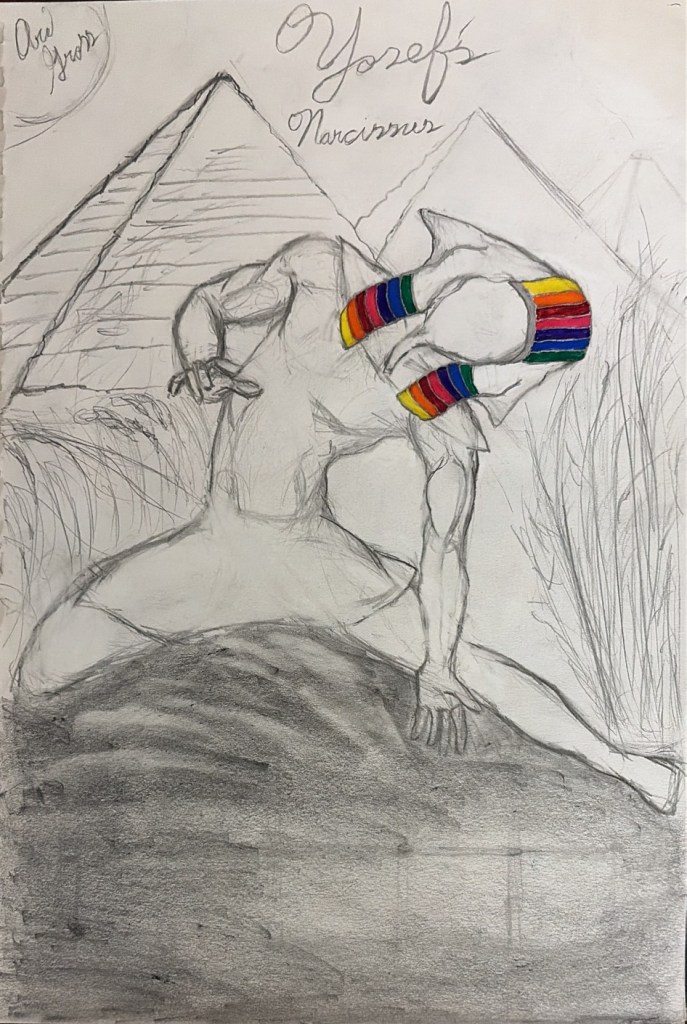
Vanity to Valor, our dreamer in many cloths and colors, Yosef ~
There are many queer avenues for interpreting Yosef’s character. One mode of entry is through his beauty. From the Torah we know that ”ויהי יוסףיפה–תאר ויפה מראה – Yosef was well formed and a pretty sight” akin to that of his mother, Rahel (Bereshit 39:6). In Bava Metzia 84a, with input from Rabbi Yohanan, our prettiest rabbi, we learn that Yosef’s beauty is in a lineage of its own – outside of the typical lines of masculine beauty. Yosef’s evolution from carefree daddy’s pretty boy to a serious thinker who is aware of his actions, misses his father, and wants to reconnect with his shepherd brothers. From wearing a multicolored coat to his prison rags, and finally royal garments, these transitions symbolize Yosef’s inner journey from great tribulations to spiritual triumph.
Art by @splittinglaughaches
TaNaKh
| Genesis 39:6 He left all that he had in Joseph’s hands and, with him there, he paid attention to nothing save the food that he ate. Now Joseph was well built and handsome. | בראשית ל״ט:ו׳ (ו) וַיַּעֲזֹ֣ב כׇּל־אֲשֶׁר־לוֹ֮ בְּיַד־יוֹסֵף֒ וְלֹא־יָדַ֤ע אִתּוֹ֙ מְא֔וּמָה כִּ֥י אִם־הַלֶּ֖חֶם אֲשֶׁר־ה֣וּא אוֹכֵ֑ל וַיְהִ֣י יוֹסֵ֔ף יְפֵה־תֹ֖אַר וִיפֵ֥ה מַרְאֶֽה׃ |
| Genesis 37:3 Now Israel loved Joseph best of all his sons, for he was the child of his old age; and he had made him an ornamented [flamingly gay, femme and sparkly] tunic.1 | בראשית ל״ז:ג׳ (ג) וְיִשְׂרָאֵ֗ל אָהַ֤ב אֶת־יוֹסֵף֙ מִכָּל־בָּנָ֔יו כִּֽי־בֶן־זְקֻנִ֥ים ה֖וּא ל֑וֹ וְעָ֥שָׂה ל֖וֹ כְּתֹ֥נֶת פַּסִּֽים׃ |
| Genesis 37:23 When Joseph came up to his brothers, they stripped Joseph of his tunic, the ornamented tunic that he was wearing | בראשית ל״ז:כ״ג (כג) וַֽיְהִ֕י כַּֽאֲשֶׁר־בָּ֥א יוֹסֵ֖ף אֶל־אֶחָ֑יו וַיַּפְשִׁ֤יטוּ אֶת־יוֹסֵף֙ אֶת־כֻּתָּנְתּ֔וֹ אֶת־כְּתֹ֥נֶת הַפַּסִּ֖ים אֲשֶׁ֥ר עָלָֽיו׃ |
| II Samuel 13:18 She was wearing an ornamented tunic, for maiden princesses were customarily dressed in such garments. | שמואל ב י״ג:י״ח (יח) וְעָלֶ֙יהָ֙ כְּתֹ֣נֶת פַּסִּ֔ים כִּי֩ כֵ֨ן תִּלְבַּ֧שְׁןָ בְנוֹת־הַמֶּ֛לֶךְ הַבְּתוּלֹ֖ת מְעִילִ֑ים |
Talmud
| Berakhot 60a:12-13 Is a prayer in that case ineffective? Rav Yosef raises an objection based on a baraita: It is stated: “And afterwards she bore a daughter, and called her name Dina” (Genesis 30:21). The Gemara asks: What is meant by the addition of the word: Afterwards? What does the verse seek to convey by emphasizing that after the birth of Zebulun she gave birth to Dina? Rav said: After Leah passed judgment on herself and said: Twelve tribes are destined to descend from Jacob, six came from me and four from the maidservants, that is ten, and if this fetus is male, my sister Rachel will not even be the equivalent of one the maidservants; immediately the fetus was transformed into a daughter, as it is stated: And she called her name Dina; meaning she named her after her judgment [din]. | ברכות ס׳ א:י״ב-י״ג וְלָא מַהֲנֵי רַחֲמֵי? מֵתִיב רַב יוֹסֵף: ״וְאַחַר יָלְדָה בַּת וַתִּקְרָא אֶת שְׁמָהּ דִּינָה״: מַאי ״וְאַחַר״? אָמַר רַב: לְאַחַר שֶׁדָּנָה לֵאָה דִּין בְּעַצְמָהּ וְאָמְרָה: שְׁנֵים עָשָׂר שְׁבָטִים עֲתִידִין לָצֵאת מִיַּעֲקֹב, שִׁשָּׁה יָצְאוּ מִמֶּנִּי וְאַרְבָּעָה מִן הַשְּׁפָחוֹת, הֲרֵי עֲשָׂרָה. אִם זֶה זָכָר, לֹא תְּהֵא אֲחוֹתִי רָחֵל כְּאַחַת הַשְּׁפָחוֹת, מִיָּד נֶהֶפְכָה לְבַת, שֶׁנֶּאֱמַר: ״וַתִּקְרָא אֶת שְׁמָהּ דִּינָה״. אֵין מַזְכִּירִין מַעֲשֵׂה נִסִּים. וְאִיבָּעֵית אֵימָא: מַעֲשֶׂה דְּלֵאָה בְּתוֹךְ אַרְבָּעִים יוֹם הֲוָה. כִּדְתַנְיָא: שְׁלֹשָׁה יָמִים הָרִאשׁוֹנִים — יְבַקֵּשׁ אָדָם רַחֲמִים שֶׁלֹּא יַסְרִיחַ. מִשְּׁלֹשָׁה וְעַד אַרְבָּעִים יְבַקֵּשׁ רַחֲמִים שֶׁיְּהֵא זָכָר. מֵאַרְבָּעִים יוֹם וְעַד שְׁלֹשָׁה חֳדָשִׁים — יְבַקֵּשׁ רַחֲמִים שֶׁלֹּא יְהֵא סַנְדָּל. מִשְּׁלֹשָׁה חֳדָשִׁים וְעַד שִׁשָּׁה — יְבַקֵּשׁ רַחֲמִים שֶׁלֹּא יְהֵא נֵפֶל. מִשִּׁשָּׁה וְעַד תִּשְׁעָה — יְבַקֵּשׁ רַחֲמִים שֶׁיֵּצֵא בְּשָׁלוֹם. |
Midrash
| Bereishit Rabbah 84:7 “Joseph was seventeen years of age, etc” (Genesis 37:2), and it further says “He was a youth” (ibid.), rather that he did youthful things. He touched up his eyes, he picked up his heels, he fixed his hair. | בראשית רבה פ״ד:ז׳ (ז) יוֹסֵף בֶּן שְׁבַע עֶשְׂרֵה שָׁנָה וגו’ (בראשית לז, ב), וְאַתְּ אָמַר וְהוּא נַעַר, אֶלָּא שֶׁהָיָה עוֹשֶׂה מַעֲשֵׂה נַעֲרוּת, מְמַשְׁמֵשׁ בְּעֵינָיו, מְתַלֶּה בַּעֲקֵבוֹ, מְתַקֵּן בְּשַׂעֲרוֹ. |
| Zohar 216b Whenever Joseph would walk by Jacob, he would look at Joseph, and his (Jacob’s) soul would be restored, as if he was looking at the mother of Joseph, for the beauty of Joseph was similar to the beauty of Rachel. |
Modern/Contemporary Interpretation

Footnotes
- translations are from Toldot Trans: Tracing a Trans Lineage through the Torah by Binya Koatz; under the heading “Multicolor Intergenerational Femme Dreamcoat” ↩︎
