Esav comes to us in common interpretation as the archetypal hyper-masculine man – almost animal in his hunger, lust, reactivity, and of course, ample body hair.
He is cast in a negative light, compared to his gentler younger twin brother, Yaakov, and is disfavored by his mother, who conspires so that he does not get his birthright. Upon recognizing betrayal, Esav is violently reactive – casting a shadow upon his lineage and commentary equates him with enemies of the Israelites – Edomites and Romans. However, in the canonical text, we see him recognize his brutishness and aggression by later showing forgiveness and emotional maturity with his brother. Despite this Yaakov continues to hold him at a distance.
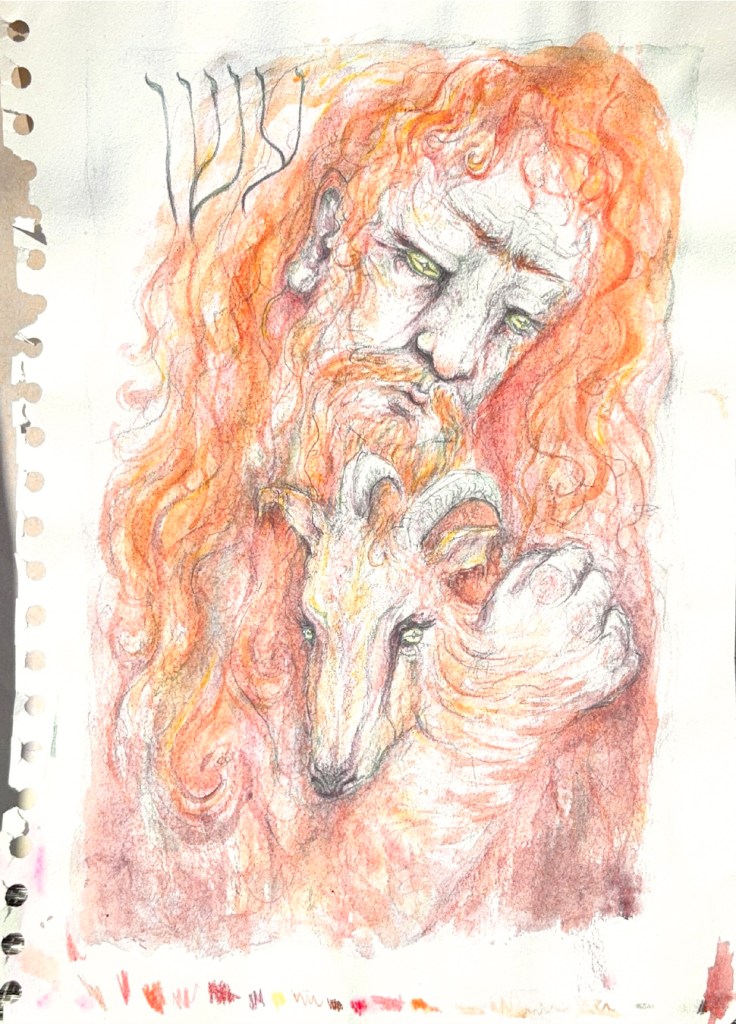
Esav is an emotional figure, whose flooding tears untether contemporary notions of masculinity from emotional repression. There is something recognizable, tragic, and Queer, about begging your father for (re)connection while bumping up against a wall of distrust.
@sof.kreid explores the impact of patriarchal wounds and toxic masculinity with this compassionate portrait of Esav. He is depicted holding a goat, the most exiled part of him with tenderness whilst simultaneously becoming it. This portrayal interrogates enduring patterns of comparing animals to humans and dehumanization employed in the prejudiced construction of “the enemy” which echoes today in anti-Arab racism. With art and interpretation, we can deconstruct this type of thinking and endeavor to build a Torah of inclusion and healing.
TaNaKh
| Genesis 25:23-28 and the LORD answered her [Rivkah], “Two nations are in your womb, Two separate peoples shall issue from your body; One people shall be mightier than the other, And the older shall serve the younger.” When her [Rebecca’s] time to give birth was at hand, there were twins in her womb. The first one emerged red, like a hairy mantle all over; so they named him Esau. Then his brother emerged, holding on to the heel of Esau; so they named him Jacob. Isaac was sixty years old when they were born. When the boys grew up, Esau became a skillful hunter, a man of the outdoors; but Jacob became a mild man, raising livestock. Isaac favored Esau because he had a taste for game; but Rebekah favored Jacob. | בראשית כ׳׳ה:כ׳׳ג–כ׳׳ח וַיֹּ֨אמֶר יְהֹוָ֜ה לָ֗הּ שְׁנֵ֤י (גיים) [גוֹיִם֙] בְּבִטְנֵ֔ךְ וּשְׁנֵ֣י לְאֻמִּ֔ים מִמֵּעַ֖יִךְ יִפָּרֵ֑דוּ וּלְאֹם֙ מִלְאֹ֣ם יֶֽאֱמָ֔ץ וְרַ֖ב יַעֲבֹ֥ד צָעִֽיר׃ וַיִּמְלְא֥וּ יָמֶ֖יהָ לָלֶ֑דֶת וְהִנֵּ֥ה תוֹמִ֖ם בְּבִטְנָֽהּ׃ וַיֵּצֵ֤א הָרִאשׁוֹן֙ אַדְמוֹנִ֔י כֻּלּ֖וֹ כְּאַדֶּ֣רֶת שֵׂעָ֑ר וַיִּקְרְא֥וּ שְׁמ֖וֹ עֵשָֽׂו׃ וְאַֽחֲרֵי־כֵ֞ן יָצָ֣א אָחִ֗יו וְיָד֤וֹ אֹחֶ֙זֶת֙ בַּעֲקֵ֣ב עֵשָׂ֔ו וַיִּקְרָ֥א שְׁמ֖וֹ יַעֲקֹ֑ב וְיִצְחָ֛ק בֶּן־שִׁשִּׁ֥ים שָׁנָ֖ה בְּלֶ֥דֶת אֹתָֽם׃ וַֽיִּגְדְּלוּ֙ הַנְּעָרִ֔ים וַיְהִ֣י עֵשָׂ֗ו אִ֛ישׁ יֹדֵ֥עַ צַ֖יִד אִ֣ישׁ שָׂדֶ֑ה וְיַעֲקֹב֙ אִ֣ישׁ תָּ֔ם יֹשֵׁ֖ב אֹהָלִֽים׃ וַיֶּאֱהַ֥ב יִצְחָ֛ק אֶת־עֵשָׂ֖ו כִּי־צַ֣יִד בְּפִ֑יו וְרִבְקָ֖ה אֹהֶ֥בֶת אֶֽת־יַעֲקֹֽב׃ |
| Genesis 25:29-34 Once when Jacob was cooking a stew, Esau came in from the open, famished. And Esau said to Jacob, “Give me some of that red stuff to gulp down, for I am famished”—which is why he was named Edom. Jacob said, “First sell me your birthright.” And Esau said, “I am at the point of death, so of what use is my birthright to me?” But Jacob said, “Swear to me first.” So he swore to him, and sold his birthright to Jacob. Jacob then gave Esau bread and lentil stew; he ate and drank, and he rose and went away. Thus did Esau spurn the birthright. | וַיָּ֥זֶד יַעֲקֹ֖ב נָזִ֑יד וַיָּבֹ֥א עֵשָׂ֛ו מִן־הַשָּׂדֶ֖ה וְה֥וּא עָיֵֽף׃ וַיֹּ֨אמֶר עֵשָׂ֜ו אֶֽל־יַעֲקֹ֗ב הַלְעִיטֵ֤נִי נָא֙ מִן־הָאָדֹ֤ם הָאָדֹם֙ הַזֶּ֔ה כִּ֥י עָיֵ֖ף אָנֹ֑כִי עַל־כֵּ֥ן קָרָֽא־שְׁמ֖וֹ אֱדֽוֹם׃ וַיֹּ֖אמֶר יַעֲקֹ֑ב מִכְרָ֥ה כַיּ֛וֹם אֶת־בְּכֹרָֽתְךָ֖ לִֽי׃ וַיֹּ֣אמֶר עֵשָׂ֔ו הִנֵּ֛ה אָנֹכִ֥י הוֹלֵ֖ךְ לָמ֑וּת וְלָמָּה־זֶּ֥ה לִ֖י בְּכֹרָֽה׃ וַיֹּ֣אמֶר יַעֲקֹ֗ב הִשָּׁ֤בְעָה לִּי֙ כַּיּ֔וֹם וַיִּשָּׁבַ֖ע ל֑וֹ וַיִּמְכֹּ֥ר אֶת־בְּכֹרָת֖וֹ לְיַעֲקֹֽב׃ וְיַעֲקֹ֞ב נָתַ֣ן לְעֵשָׂ֗ו לֶ֚חֶם וּנְזִ֣יד עֲדָשִׁ֔ים וַיֹּ֣אכַל וַיֵּ֔שְׁתְּ וַיָּ֖קׇם וַיֵּלַ֑ךְ וַיִּ֥בֶז עֵשָׂ֖ו אֶת־הַבְּכֹרָֽה׃ |
| Genesis 27:34 – 42 When Esau heard his father’s words, he burst into wild and bitter sobbing, and said to his father, “Bless me too, Father!”But he answered, “Your brother came with guile and took away your blessing.” [Esau] said, “Was he, then, named Jacob that he might supplant me these two times? First he took away my birthright and now he has taken away my blessing!” And he added, “Have you not reserved a blessing for me?” Isaac answered, saying to Esau, “But I have made him master over you: I have given him all his brothers for servants, and sustained him with grain and wine. What, then, can I still do for you, my son?” And Esau said to his father, “Have you but one blessing, Father? Bless me too, Father!” And Esau wept aloud. And his father Isaac answered, saying to him, “See, your abode shall enjoy the fat of the earth And the dew of heaven above. Yet by your sword you shall live, And you shall serve your brother; But when you grow restive, You shall break his yoke from your neck.” Now Esau harbored a grudge against Jacob because of the blessing which his father had given him, and Esau said to himself, “Let but the mourning period of my father come, and I will kill my brother Jacob.” When the words of her older son Esau were reported to Rebekah, she sent for her younger son Jacob and said to him, “Your brother Esau is consoling himself by planning to kill you. | כִּשְׁמֹ֤עַ עֵשָׂו֙ אֶת־דִּבְרֵ֣י אָבִ֔יו וַיִּצְעַ֣ק צְעָקָ֔ה גְּדֹלָ֥ה וּמָרָ֖ה עַד־מְאֹ֑ד וַיֹּ֣אמֶר לְאָבִ֔יו בָּרְכֵ֥נִי גַם־אָ֖נִי אָבִֽי׃ וַיֹּ֕אמֶר בָּ֥א אָחִ֖יךָ בְּמִרְמָ֑ה וַיִּקַּ֖ח בִּרְכָתֶֽךָ׃ וַיֹּ֡אמֶר הֲכִי֩ קָרָ֨א שְׁמ֜וֹ יַעֲקֹ֗ב וַֽיַּעְקְבֵ֙נִי֙ זֶ֣ה פַעֲמַ֔יִם אֶת־בְּכֹרָתִ֣י לָקָ֔ח וְהִנֵּ֥ה עַתָּ֖ה לָקַ֣ח בִּרְכָתִ֑י וַיֹּאמַ֕ר הֲלֹא־אָצַ֥לְתָּ לִּ֖י בְּרָכָֽה׃ וַיַּ֨עַן יִצְחָ֜ק וַיֹּ֣אמֶר לְעֵשָׂ֗ו הֵ֣ן גְּבִ֞יר שַׂמְתִּ֥יו לָךְ֙ וְאֶת־כׇּל־אֶחָ֗יו נָתַ֤תִּי לוֹ֙ לַעֲבָדִ֔ים וְדָגָ֥ן וְתִירֹ֖שׁ סְמַכְתִּ֑יו וּלְכָ֣ה אֵפ֔וֹא מָ֥ה אֶֽעֱשֶׂ֖ה בְּנִֽי׃ וַיֹּ֨אמֶר עֵשָׂ֜ו אֶל־אָבִ֗יו הַֽבְרָכָ֨ה אַחַ֤ת הִֽוא־לְךָ֙ אָבִ֔י בָּרְכֵ֥נִי גַם־אָ֖נִי אָבִ֑י וַיִּשָּׂ֥א עֵשָׂ֛ו קֹל֖וֹ וַיֵּֽבְךְּ׃ וַיַּ֛עַן יִצְחָ֥ק אָבִ֖יו וַיֹּ֣אמֶר אֵלָ֑יו הִנֵּ֞ה מִשְׁמַנֵּ֤י הָאָ֙רֶץ֙ יִהְיֶ֣ה מֽוֹשָׁבֶ֔ךָ וּמִטַּ֥ל הַשָּׁמַ֖יִם מֵעָֽל׃ וְעַל־חַרְבְּךָ֣ תִֽחְיֶ֔ה וְאֶת־אָחִ֖יךָ תַּעֲבֹ֑ד וְהָיָה֙ כַּאֲשֶׁ֣ר תָּרִ֔יד וּפָרַקְתָּ֥ עֻלּ֖וֹ מֵעַ֥ל צַוָּארֶֽךָ׃ וַיִּשְׂטֹ֤ם עֵשָׂו֙ אֶֽת־יַעֲקֹ֔ב עַ֨ל־הַבְּרָכָ֔ה אֲשֶׁ֥ר בֵּרְכ֖וֹ אָבִ֑יו וַיֹּ֨אמֶר עֵשָׂ֜ו בְּלִבּ֗וֹ יִקְרְבוּ֙ יְמֵי֙ אֵ֣בֶל אָבִ֔י וְאַֽהַרְגָ֖ה אֶת־יַעֲקֹ֥ב אָחִֽי׃ וַיֻּגַּ֣ד לְרִבְקָ֔ה אֶת־דִּבְרֵ֥י עֵשָׂ֖ו בְּנָ֣הּ הַגָּדֹ֑ל וַתִּשְׁלַ֞ח וַתִּקְרָ֤א לְיַעֲקֹב֙ בְּנָ֣הּ הַקָּטָ֔ן וַתֹּ֣אמֶר אֵלָ֔יו הִנֵּה֙ עֵשָׂ֣ו אָחִ֔יךָ מִתְנַחֵ֥ם לְךָ֖ לְהׇרְגֶֽךָ׃ |
| Genesis 33:1 – 4 Looking up, Jacob saw Esau coming, with a retinue of four hundred. He divided the children among Leah, Rachel, and the two maids, putting the maids and their children first, Leah and her children next, and Rachel and Joseph last. He himself went on ahead and bowed low to the ground seven times until he was near his brother. Esau ran to greet him. He embraced him and, falling on his neck, he kissed him; and they wept. | וַיִּשָּׂ֨א יַעֲקֹ֜ב עֵינָ֗יו וַיַּרְא֙ וְהִנֵּ֣ה עֵשָׂ֣ו בָּ֔א וְעִמּ֕וֹ אַרְבַּ֥ע מֵא֖וֹת אִ֑ישׁ וַיַּ֣חַץ אֶת־הַיְלָדִ֗ים עַל־לֵאָה֙ וְעַל־רָחֵ֔ל וְעַ֖ל שְׁתֵּ֥י הַשְּׁפָחֽוֹת׃ וַיָּ֧שֶׂם אֶת־הַשְּׁפָח֛וֹת וְאֶת־יַלְדֵיהֶ֖ן רִֽאשֹׁנָ֑ה וְאֶת־לֵאָ֤ה וִֽילָדֶ֙יהָ֙ אַחֲרֹנִ֔ים וְאֶת־רָחֵ֥ל וְאֶת־יוֹסֵ֖ף אַחֲרֹנִֽים׃ וְה֖וּא עָבַ֣ר לִפְנֵיהֶ֑ם וַיִּשְׁתַּ֤חוּ אַ֙רְצָה֙ שֶׁ֣בַע פְּעָמִ֔ים עַד־גִּשְׁתּ֖וֹ עַד־אָחִֽיו׃ וַיָּ֨רׇץ עֵשָׂ֤ו לִקְרָאתוֹ֙ וַֽיְחַבְּקֵ֔הוּ וַיִּפֹּ֥ל עַל־צַוָּארָ֖ו וַׄיִּׄשָּׁׄקֵ֑ׄהׄוּׄ וַיִּבְכּֽוּ |
Interpretive Differences for 33:4
- Targum Jerusalem And Esau ran to meet him, and hugged him, and fell upon his neck and kissed him. Esau wept for the crushing of his teeth, and Jakob wept for the tenderness of his neck.
- Siftei Chakhamim (Genesis 33:4:1) There are those who explained these dots as saying that he did not kiss him wholeheartedly. Meaning: וישקהו has dots on all letters except the ש. Thus it is as if it is written ויקהו, as in הקהה את שיניו (blunt his teeth — Pesach Haggadah). This is because he intended to bite him.
- Ibn Ezra on Genesis 33:4:1 [AND KISSED HIM.] The Midrashic interpretation concerning the dots on ve-yishakehu (and kissed him) is good for them that are drawn from the breasts. It is obvious from the plain meaning of the text that Esau did not intend to harm Jacob, the proof being and they wept, as Joseph did with his brethren.
- See Pirkei DeRabbi Eliezer in Midrash section
Talmud
| Bava Batra 16b:13-14 Rabbi Yoḥanan says: That wicked Esau committed five transgressions on that day: He engaged in sexual intercourse with a betrothed maiden, he killed a person… He engaged in sexual intercourse with a betrothed maiden, as it is written here: “And Esau came in from the field”; and it is written there: “For he found her in a field” (Deuteronomy 22:27). He killed a person, as it is written here: “And he was faint”; and it is written there: “Woe is me, for my soul faints before the slayers” (Jeremiah 4:31). | אמר רבי יוחנן חמש עבירות עבר אותו רשע באותו היום בא על נערה מאורסה והרג את הנפש… בא על נערה מאורסה כתיב הכא (בראשית כה, כט) ויבא עשו מן השדה וכתיב התם (דברים כב, כז) כי בשדה מצאה הרג את הנפש כתיב הכא עיף וכתיב התם (ירמיהו ד, לא) אוי נא לי כי עיפה נפשי להורגים |
Midrash
| Bereishit Rabba 63:8 Another matter, “the first emerged ruddy” – why did Esau emerge first? It was so he would emerge and his corruption would depart with him. Rabbi Abahu said: It is like that bathhouse attendant who washes the bathhouse and then bathes the king’s son. So, why did Esau emerge first? It was so he would emerge and his corruption would depart with him. *The womb would remain clean for Jacob. … “To the land of Se’ir, the field of Edom” – he is ruddy, his cooked food is red, his land is red, his mighty are red, his garment is red, and a red one will exact retribution from him in red garments. He is ruddy – “the first emerged ruddy” (Genesis 25:25); “his cooked food is red” – “feed me please from that red, red dish” (Genesis 25:30); “his land is red” – “to the land of Se’ir, the field of Edom”; “his mighty are red” – “mighty ones are colored scarlet…” (Nahum 2:4); and a red [adom] one will exact retribution from him – “my beloved is clear and ruddy [adom]” (Song of Songs 5:10); in red garments – “why is there red on your garments?” (Isaiah 63:2). |
| Pirkei DeRabbi Eliezer 37:81 When Jacob passed to come into the land of Canaan, Esau came to him from Mount Seir in violent anger, contriving to slay him, as it is said, “The wicked plotteth against the just, and gnasheth upon him with his teeth” (Ps. 37:12). Esau said: I will not slay Jacob with bow and arrows, but with my mouth and with my teeth will I slay him, and suck his blood, as it is said, “ And Esau ran to greet him, and he embraced him, and he fell on his neck, ȧṅḋ ḱiṡṡėḋ ḣiṁ, and they wept.” (Gen. 33:4). Do not read ẇȧẏiṡḣȧḱėḣú (ȧṅḋ ḱiṡṡėḋ ḣiṁ,), but (read) wayinshkehu (and bit him). But Jacob’s neck became like ivory, and concerning him the Scripture says, “Thy neck is like the tower of ivory” (Cant. 7:4). The wicked (Esau’s) teeth became blunt, and when the wicked one saw that the desire of his heart was not realized he began to be angry, and to gnash with his teeth, as it is said, “The wicked shall see it, and be grieved; he shall gnash with his teeth, and melt away” (Ps. 112:10). |
| Siddur Sefard, Yotzerot, Parashat Zachor 29 Remember the man (Esau) who caused the Patriarch (Abraham) to expire before his time. By murder, stealing and debauchery he terrified him and abscinded five years from his life Remember him, who contemned his brother’s favor. scorning him who was paying his last respects to his grandfather. He was like one hearing reproach on one in distress. Remember him who violated a betrothed girl in the field; who shed blood on returning from the field, who deceived his father (Isaac) who meditated in the field. Remember him who turned a deaf ear to exhortation; who contemned the birthright for the sake of a cup of indignation; who cast off God’s yoke and effaced the sin of the covenant. Remember the man who by his insolence and crookedness darkened the light of his father with the smoke of idolatrous sacrifice and cruelly harbored revenge against his brother. Remember him who prostituted himself like a woman; whose pride of heart provoked him to such depravity: his mighty men shall therefore be broken like a woman in her pangs. Remember the seed of evildoers. loathsome and tainted, who set out to destroy the smooth one (Jacob) with a shout of exaltation, arrogantly hiding a net to destroy the brother. |
Mondern Commentary
Rachel Adler, Engendering Judaism
But I am not willing to relinquish these problematic grandfather-tales. Like Esau, I cry out to them, “Have you only one blessing, father? Bless me too, father.” It is precisely because I believe that these texts have blessings yet to bestow that, like another member of Esau’s blessing-starved family, I will not let them go until they bless me. I will not abandon traditional texts, and I will not absolve them of moral responsibility”
Aviva Zornburg, Genesis: The Beginning of Desire
When he meets Esau, after his night encounter with his Israel-self, “he himself went on ahead” (33:3). He is held in close embrace by his brother. ‘Va’y’hebkehu‘ [in the Hebrew} clearly evokes the love-hate ambiguities of the wrestler’s grip – ‘va-ye’avek‘. There is a tension that is both erotic and agonistic, since each brother wants of the other what he lacks and each fears to lose his place on the earth […] Jacob himself embraces and is embraced. He offers Esau his “blessing” (33:10), be which he means, according to Rashi, his gift, his salute to Esau, in the moment of true encounter: he greets the godliness in Esau’s face (33:10) and, implicitly, he wishes him, too, more life. This is a moment of equilibrium, in which Esau is genuinely moved by Jacob’s courage and generosity.
