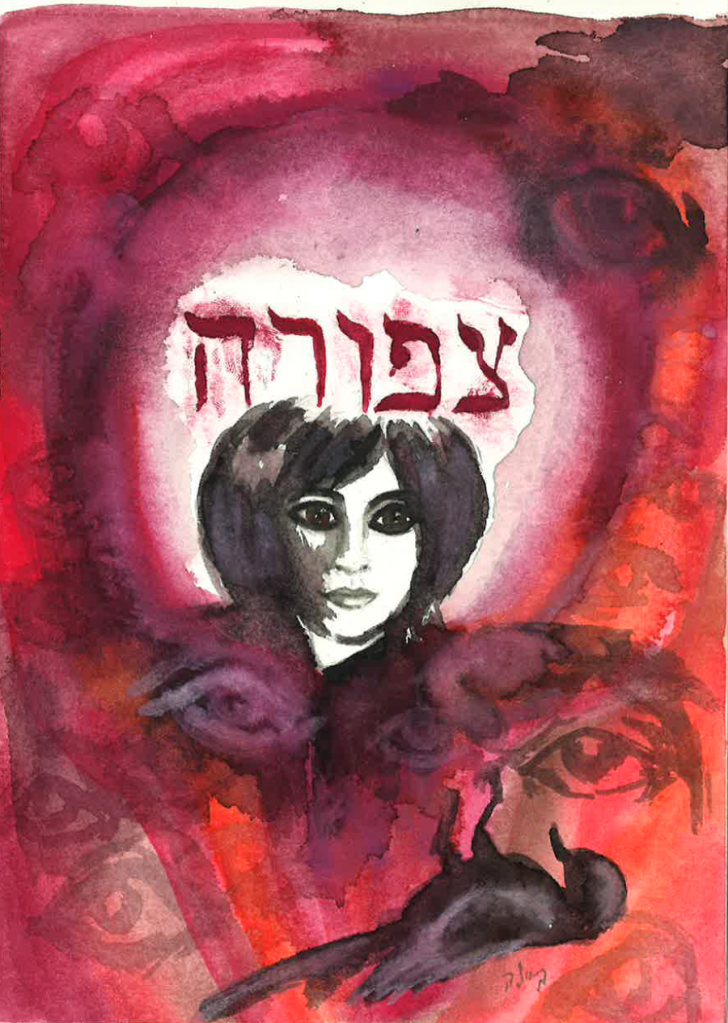
Our elusive three verse wonder; wife and savior of Moshe Rabbeinu, good with a knife (read: flint stone), foreskin chopper, blood ritual enthusiast, and unafraid of an angry murderous god: Zippora of Midian
On the way to Egypt, Moses and his family are confronted with the wrathful G!d looking to end Moses’ life. Zipporah performs a hasty blood ritual and incantation to protect her sons and Moses. This brief story provides insight into the kind of woman Zipporah was: her quick wit, bravery in the face of murderous divine will, and ability to empathize and enact cross-cultural practices. Without her (and five other women) Moses would not have survived to lead the people of Israel out of Egypt.
🎨 @hismotherstable during Deviant Drash at MNJCCs Lishmah
TaNah
| English | Hebrew |
| Exodus 2:15-22 When Pharaoh learned of the matter, he sought to kill Moses; but Moses fled from Pharaoh. He arrived in the land of Midian, and sat down beside a well. Now the priest of Midian had seven daughters. They came to draw water, and filled the troughs to water their father’s flock; but shepherds came and drove them off. Moses rose to their defense, and he watered their flock. When they returned to their father Reuel, he said, “How is it that you have come back so soon today?” They answered, “An Egyptian rescued us from the shepherds; he even drew water for us and watered the flock.” He said to his daughters, “Where is he then? Why did you leave the man? Ask him in to break bread.” Moses consented to stay with the man, and he gave Moses his daughter Zipporah as wife. She bore a son whom he named Gershom, for he said, “I have been a stranger in a foreign land.” | שמות ב:טו–כב וַיִּשְׁמַ֤ע פַּרְעֹה֙ אֶת־הַדָּבָ֣ר הַזֶּ֔ה וַיְבַקֵּ֖שׁ לַהֲרֹ֣ג אֶת־מֹשֶׁ֑ה וַיִּבְרַ֤ח מֹשֶׁה֙ מִפְּנֵ֣י פַרְעֹ֔ה וַיֵּ֥שֶׁב בְּאֶֽרֶץ־מִדְיָ֖ן וַיֵּ֥שֶׁב עַֽל־הַבְּאֵֽר׃ וּלְכֹהֵ֥ן מִדְיָ֖ן שֶׁ֣בַע בָּנ֑וֹת וַתָּבֹ֣אנָה וַתִּדְלֶ֗נָה וַתְּמַלֶּ֙אנָה֙ אֶת־הָ֣רְהָטִ֔ים לְהַשְׁק֖וֹת צֹ֥אן אֲבִיהֶֽן׃ וַיָּבֹ֥אוּ הָרֹעִ֖ים וַיְגָרְשׁ֑וּם וַיָּ֤קׇם מֹשֶׁה֙ וַיּ֣וֹשִׁעָ֔ן וַיַּ֖שְׁקְ אֶת־צֹאנָֽם׃ וַתָּבֹ֕אנָה אֶל־רְעוּאֵ֖ל אֲבִיהֶ֑ן וַיֹּ֕אמֶר מַדּ֛וּעַ מִהַרְתֶּ֥ן בֹּ֖א הַיּֽוֹם׃ וַתֹּאמַ֕רְןָ אִ֣ישׁ מִצְרִ֔י הִצִּילָ֖נוּ מִיַּ֣ד הָרֹעִ֑ים וְגַם־דָּלֹ֤ה דָלָה֙ לָ֔נוּ וַיַּ֖שְׁקְ אֶת־הַצֹּֽאן׃ וַיֹּ֥אמֶר אֶל־בְּנֹתָ֖יו וְאַיּ֑וֹ לָ֤מָּה זֶּה֙ עֲזַבְתֶּ֣ן אֶת־הָאִ֔ישׁ קִרְאֶ֥ן ל֖וֹ וְיֹ֥אכַל לָֽחֶם׃ וַיּ֥וֹאֶל מֹשֶׁ֖ה לָשֶׁ֣בֶת אֶת־הָאִ֑ישׁ וַיִּתֵּ֛ן אֶת־צִפֹּרָ֥ה בִתּ֖וֹ לְמֹשֶֽׁה׃ וַתֵּ֣לֶד בֵּ֔ן וַיִּקְרָ֥א אֶת־שְׁמ֖וֹ גֵּרְשֹׁ֑ם כִּ֣י אָמַ֔ר גֵּ֣ר הָיִ֔יתִי בְּאֶ֖רֶץ נׇכְרִיָּֽה׃ |
| Exodus 4:19-20 יהוה said to Moses in Midian, “Go back to Egypt, for all those who sought to kill you are dead.” So Moses took his wife and sons, mounted them on an ass, and went back to the land of Egypt; and Moses took the rod of God with him. | שמות ד:יט–כ וַיֹּ֨אמֶר יְהֹוָ֤ה אֶל־מֹשֶׁה֙ בְּמִדְיָ֔ן לֵ֖ךְ שֻׁ֣ב מִצְרָ֑יִם כִּי־מֵ֙תוּ֙ כׇּל־הָ֣אֲנָשִׁ֔ים הַֽמְבַקְשִׁ֖ים אֶת־נַפְשֶֽׁךָ׃ וַיִּקַּ֨ח מֹשֶׁ֜ה אֶת־אִשְׁתּ֣וֹ וְאֶת־בָּנָ֗יו וַיַּרְכִּבֵם֙ עַֽל־הַחֲמֹ֔ר וַיָּ֖שׇׁב אַ֣רְצָה מִצְרָ֑יִם וַיִּקַּ֥ח מֹשֶׁ֛ה אֶת־מַטֵּ֥ה הָאֱלֹהִ֖ים בְּיָדֽוֹ׃ |
| Exodus 4:24-26 At a night encampment on the way, יהוה encountered him and sought to kill him. So Zipporah took a flint and cut off her son’s foreskin, and touched his legs with it, saying, “You are truly a bridegroom of blood to me!” And when [God] let him alone, she added, “A bridegroom of blood because of the circumcision.” | שמות ד:כד–כו וַיְהִ֥י בַדֶּ֖רֶךְ בַּמָּל֑וֹן וַיִּפְגְּשֵׁ֣הוּ יְהֹוָ֔ה וַיְבַקֵּ֖שׁ הֲמִיתֽוֹ׃ וַתִּקַּ֨ח צִפֹּרָ֜ה צֹ֗ר וַתִּכְרֹת֙ אֶת־עׇרְלַ֣ת בְּנָ֔הּ וַתַּגַּ֖ע לְרַגְלָ֑יו וַתֹּ֕אמֶר כִּ֧י חֲתַן־דָּמִ֛ים אַתָּ֖ה לִֽי׃ וַיִּ֖רֶף מִמֶּ֑נּוּ אָ֚ז אָֽמְרָ֔ה חֲתַ֥ן דָּמִ֖ים לַמּוּלֹֽת׃ {פ} |
| Exodus 18:1-7 Yisro heard—priest of Midian, Moshe’s father-in-law—about all that Elohim had done for Moshe and for His people Yisrael, that Adonoy brought Yisrael out of Egypt. Moshe’s father-in-law, Yisro took Moshe’s wife, Tzipporah, after he had sent her back [home], along with her two sons. The name of one was Gershom, because he [Moshe] had said, “I was a stranger in an alien land.” The name of the [other] one was Eliezer, because the God of my father was my help, and rescued me from the sword of Pharaoh. Moshe’s father-in-law, Yisro came, along with his [Moshe’s] sons, and wife, to Moshe, to the desert where he was camped near the mountain of God. He said to Moshe, “I, your father-in-law, Yisro, am coming to you along with your wife; her two sons are with her.” Moshe went out to greet his father-in-law. He prostrated himself and [then] kissed him. They asked after each other’s well being, and went into the tent. | שמות יח:א–ז וַיִּשְׁמַ֞ע יִתְר֨וֹ כֹהֵ֤ן מִדְיָן֙ חֹתֵ֣ן מֹשֶׁ֔ה אֵת֩ כׇּל־אֲשֶׁ֨ר עָשָׂ֤ה אֱלֹהִים֙ לְמֹשֶׁ֔ה וּלְיִשְׂרָאֵ֖ל עַמּ֑וֹ כִּֽי־הוֹצִ֧יא יְהֹוָ֛ה אֶת־יִשְׂרָאֵ֖ל מִמִּצְרָֽיִם׃ וַיִּקַּ֗ח יִתְרוֹ֙ חֹתֵ֣ן מֹשֶׁ֔ה אֶת־צִפֹּרָ֖ה אֵ֣שֶׁת מֹשֶׁ֑ה אַחַ֖ר שִׁלּוּחֶֽיהָ׃. וְאֵ֖ת שְׁנֵ֣י בָנֶ֑יהָ אֲשֶׁ֨ר שֵׁ֤ם הָֽאֶחָד֙ גֵּֽרְשֹׁ֔ם כִּ֣י אָמַ֔ר גֵּ֣ר הָיִ֔יתִי בְּאֶ֖רֶץ נׇכְרִיָּֽה׃ וְשֵׁ֥ם הָאֶחָ֖ד אֱלִיעֶ֑זֶר כִּֽי־אֱלֹהֵ֤י אָבִי֙ בְּעֶזְרִ֔י וַיַּצִּלֵ֖נִי מֵחֶ֥רֶב פַּרְעֹֽה׃ וַיָּבֹ֞א יִתְר֨וֹ חֹתֵ֥ן מֹשֶׁ֛ה וּבָנָ֥יו וְאִשְׁתּ֖וֹ אֶל־מֹשֶׁ֑ה אֶל־הַמִּדְבָּ֗ר אֲשֶׁר־ה֛וּא חֹנֶ֥ה שָׁ֖ם הַ֥ר הָאֱלֹהִֽים׃ וַיֹּ֙אמֶר֙ אֶל־מֹשֶׁ֔ה אֲנִ֛י חֹתֶנְךָ֥ יִתְר֖וֹ בָּ֣א אֵלֶ֑יךָ וְאִ֨שְׁתְּךָ֔ וּשְׁנֵ֥י בָנֶ֖יהָ עִמָּֽהּ׃ וַיֵּצֵ֨א מֹשֶׁ֜ה לִקְרַ֣את חֹֽתְנ֗וֹ וַיִּשְׁתַּ֙חוּ֙ וַיִּשַּׁק־ל֔וֹ וַיִּשְׁאֲל֥וּ אִישׁ־לְרֵעֵ֖הוּ לְשָׁל֑וֹם וַיָּבֹ֖אוּ הָאֹֽהֱלָה׃ |
Midrash
| Sifre BaMidbar 99:11 “Tzipporah” (Moses’ wife) — Why was she called “Tzipporah”? “Tzfu ur’uh” (“Look and see”) how beautiful this woman is! “the Cushite (Ethiopian) woman”: Now was she an Ethiopian? Wasn’t she a Midianite, viz. (Shemot 2:16) “And the priest of Midian had seven daughters, etc.” What is the intent of “Cushite”? Just as a Cushite is exceptional in his skin, so Tzipporah was exceptional in her beauty — more so than all the women […] “for he had taken a Cushite woman”: Why is this written? Is it not written (immediately before) “about the Cushite woman that he had taken”? — There are those who are beautiful in appearance, but not in deed; in deed, but not in appearance, viz. (Proverbs 11:22) “Like a golden ring in the snout of a pig is a beautiful woman lacking in sense. Tzipporah was beautiful in both — wherefore it is written “about the Cushite woman that he had taken, for he had taken a Cushite woman.” |
| Shemot Rabbah 5:82 Tzipora took flint, cut her son’s foreskin, and cast it at his feet; she said: You are to me a bridegroom of blood” (Exodus 4:25). “Tzipora took flint” – how did Tzipora know that it was over matters of circumcision that Moses was endangered? Rather, the angel came and swallowed Moses from his head to the [place of]3 circumcision. When Tzipora saw that he swallowed him only until the circumcision, she understood that he was being harmed due to matters of circumcision. She realized just how great the power of circumcision is, as he was unable to swallow him beyond there. Immediately, “she cut her son’s foreskin, and cast it at his feet.” “She said: You are to me a bridegroom of blood” – she said: ‘My bridegroom, may you be given to me thanks to this blood of circumcision, as I fulfilled the mitzva.’ Immediately, “he let him alone” (4:26). |
- This translation is from Sefaria. I took excerpts that were relevant to the question of if Tzipporah is the ‘Cushite woman’ who Miriam speaks about in Numbers 12. Since it is midrashic that these two women are the same, we have not included the Num. 12 episode in the TaNaKh section. ↩︎
- Cliel’s thoughts on this midrash:
There are a plethora of reasons why Tziporah would have figured out what she needed to do, but this exposition is by far my favorite. The physical and transformative act of circumcising is not directly for procreation and certainly not for pleasure, as it is connected to the Brit and Jewish identity formation of those who have a penis. However, the ritual does involve exposing and handling a vulnerable sex organ. It is through this strange act of fellatio that Tziporah is to have understood that a circumcision needed to take place. Often, when mouths and penises come together, it is usually for a kind of pleasure-seeking action (whose pleasure can often be in question, especially when power is at play). In complete opposition, here, the divine entity takes the human body down Their throat multiple times, leaving the tip of Moshe’s poor penis exposed, to which eyes are drawn. Is this then the opposite of sexual? A non-blowjob? Everything but the tip? It is therefore the least sexy thing God can do, or maybe the sexiest? ↩︎ - In the midrash, the word used to describe this place is מילה ’circumcised membrum’ but in Rashi’s interpretation of this story, he uses the phrase עד אותו מקום ’to that place’ as well as the word for thigh and legs. His rendition of the story relies on euphemism to relay how Tzipporah knew what she was meant to cut off. ↩︎
