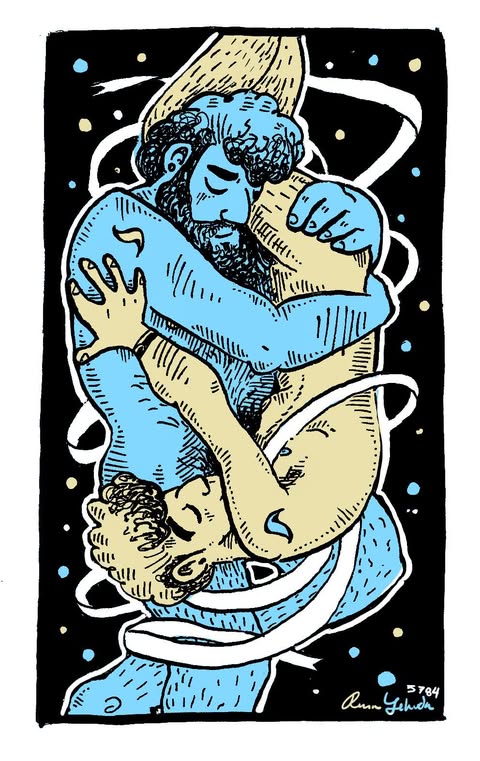
The self-self duo Yaakov and Yisrael: our textual forefather who experienced a profound transformation through Divine encounter ~
Yaakov starts off as an inside-kid and bookish mama’s boy willing to participate in trickstery self-serving ways. Later, he is physically and emotionally changed during an embodied encounter with the Divine. He demands a blessing which leads to a transition in name/identity, and the harm he experiences in his body changes how he moves and also how the Jewish people consume food forever.
TaNaKh
| English | Hebrew |
| Genesis 23:25-29 and G!d answered her, “Two nations are in your womb, two separate peoples shall issue forth from your body; one people shall be mightier than the other, and the older shall serve the younger. When her time to give birth was at hand, there were twins in her womb. The first one emerged red, like a hairy mantle all over; so they named him Esau. Then his brother emerged, holding on to the heel of Esau; so they named him Jacob. When the boys grew up, Esau became a skillful hunter, a man of the outdoors; but Jacob was a mild man who stayed in camp. Once when Jacob was cooking a stew, Esau came in from the open, famished. | בראשת כה:כג–כט וַיֹּ֨אמֶר יְהֹוָ֜ה לָ֗הּ שְׁנֵ֤י (גיים) [גוֹיִם֙] בְּבִטְנֵ֔ךְ וּשְׁנֵ֣י לְאֻמִּ֔ים מִמֵּעַ֖יִךְ יִפָּרֵ֑דוּ וַיִּמְלְא֥וּ יָמֶ֖יהָ לָלֶ֑דֶת וְהִנֵּ֥ה תוֹמִ֖ם בְּבִטְנָֽהּ׃ וּלְאֹם֙ מִלְאֹ֣ם יֶֽאֱמָ֔ץ וְרַ֖ב יַעֲבֹ֥ד צָעִֽיר׃ וַיֵּצֵ֤א הָרִאשׁוֹן֙ אַדְמוֹנִ֔י כֻּלּ֖וֹ כְּאַדֶּ֣רֶת שֵׂעָ֑ר וַיִּקְרְא֥וּ שְׁמ֖וֹ עֵשָֽׂו׃ וְאַֽחֲרֵי־כֵ֞ן יָצָ֣א אָחִ֗יו וְיָד֤וֹ אֹחֶ֙זֶת֙ בַּעֲקֵ֣ב עֵשָׂ֔ו . וַֽיִּגְדְּלוּ֙ הַנְּעָרִ֔ים וַיְהִ֣י עֵשָׂ֗ו אִ֛ישׁ יֹדֵ֥עַ צַ֖יִד אִ֣ישׁ שָׂדֶ֑ה וְיַעֲקֹב֙ אִ֣ישׁ תָּ֔ם יֹשֵׁ֖ב אֹהָלִֽים׃ וַיָּ֥זֶד יַעֲקֹ֖ב נָזִ֑יד וַיָּבֹ֥א עֵשָׂ֛ו מִן־הַשָּׂדֶ֖ה וְה֥וּא עָיֵֽף׃ וַיִּקְרָ֥א שְׁמ֖וֹ יַעֲקֹ֑ב |
| Genesis 27:11 Jacob answered his mother Rebekah, “But my brother Esau is a hairy man and I am a smooth-skinned man. | בראשת כז:יא וַיֹּ֣אמֶר יַעֲקֹ֔ב אֶל־רִבְקָ֖ה אִמּ֑וֹ הֵ֣ן עֵשָׂ֤ו אָחִי֙ אִ֣ישׁ שָׂעִ֔ר וְאָנֹכִ֖י אִ֥ישׁ חָלָֽק׃ |
| Genesis 27:33-36 And Isaac trembled very exceedingly, and said: ‘Who then is he that hath taken venison, and brought it me, and I have eaten of all before thou camest, and have blessed him? yea, and he shall be blessed. When Esau heard the words of his father, he cried with an exceeding great and bitter cry, and said unto his father: ‘Bless me, even me also, O my father.’ And he said: ‘Thy brother came with guile, and hath taken away thy blessing. And he said: ‘Is not he rightly named Jacob? for he hath supplanted me these two times: he took away my birthright; and, behold, now he hath taken away my blessing.’ And he said: ‘Hast thou not reserved a blessing for me?’ | בראשת כז:לג–לו וַיֶּחֱרַ֨ד יִצְחָ֣ק חֲרָדָה֮ גְּדֹלָ֣ה עַד־מְאֹד֒ וַיֹּ֡אמֶר מִֽי־אֵפ֡וֹא ה֣וּא הַצָּֽד־צַ֩יִד֩ וַיָּ֨בֵא לִ֜י וָאֹכַ֥ל מִכֹּ֛ל בְּטֶ֥רֶם תָּב֖וֹא וָאֲבָרְכֵ֑הוּ :גַּם־בָּר֖וּךְ יִהְיֶֽה כִּשְׁמֹ֤עַ עֵשָׂו֙ אֶת־דִּבְרֵ֣י אָבִ֔יו וַיִּצְעַ֣ק צְעָקָ֔ה גְּדֹלָ֥ה וּמָרָ֖ה עַד־מְאֹ֑ד וַיֹּ֣אמֶר לְאָבִ֔יו בָּרְכֵ֥נִי גַם־אָ֖נִי אָבִֽי׃ וַיֹּ֕אמֶר בָּ֥א אָחִ֖יךָ בְּמִרְמָ֑ה וַיִּקַּ֖ח בִּרְכָתֶֽךָ׃ וַיֹּ֡אמֶר הֲכִי֩ קָרָ֨א שְׁמ֜וֹ יַעֲקֹ֗ב וַֽיַּעְקְבֵ֙נִי֙ זֶ֣ה פַעֲמַ֔יִם אֶת־בְּכֹרָתִ֣י לָקָ֔ח וְהִנֵּ֥ה עַתָּ֖ה לָקַ֣ח בִּרְכָתִ֑י וַיֹּאמַ֕ר הֲלֹא־אָצַ֥לְתָּ לִּ֖י בְּרָכָֽה׃ |
| Genesis 32:25-32 And Yaakov was left alone— and a man wrestled with him until the coming up of dawn. He saw that he could not prevail against him, so he touched the socket of his thigh; and the socket of Yaakov’s thigh was dislocated as he wrestled with him. Then he said: Let me go, for dawn has come up! But he said: I will not let you go unless you bless me. He said to him: What is your name? And he said: Yaakov. Then he said: Not as Yaakov/Heel-Sneak shall your name be henceforth uttered, but rather as Yisrael/God-Fighter, for you have fought with God and men and have prevailed. Then Yaakov asked and said: Pray tell me your name! But he said: Why, now, do you ask about my name? And he gave him farewell-blessing there. Yaakov called the name of the place: Face of God, for: I have seen God, face to face, and my life has been saved! The sun rose on him as he crossed by Penuel, and he was limping on his thigh. | בראשת לב:כה–לב וַיִּוָּתֵ֥ר יַעֲקֹ֖ב לְבַדּ֑וֹ וַיֵּאָבֵ֥ק אִישׁ֙ עִמּ֔וֹ עַ֖ד עֲל֥וֹת הַשָּֽׁחַר׃ וַיַּ֗רְא כִּ֣י לֹ֤א יָכֹל֙ ל֔וֹ וַיִּגַּ֖ע בְּכַף־יְרֵכ֑וֹ1 וַתֵּ֙קַע֙ כַּף־יֶ֣רֶךְ יַעֲקֹ֔ב בְּהֵאָֽבְק֖וֹ עִמּֽוֹ׃ וַיֹּ֣אמֶר שַׁלְּחֵ֔נִי כִּ֥י עָלָ֖ה הַשָּׁ֑חַר וַיֹּ֙אמֶר֙ לֹ֣א אֲשַֽׁלֵּחֲךָ֔ כִּ֖י אִם־בֵּרַכְתָּֽנִי׃ וַיֹּ֥אמֶר אֵלָ֖יו מַה־שְּׁמֶ֑ךָ וַיֹּ֖אמֶר יַעֲקֹֽב׃ וַיֹּ֗אמֶר לֹ֤א יַעֲקֹב֙ יֵאָמֵ֥ר עוֹד֙ שִׁמְךָ֔ כִּ֖י אִם־יִשְׂרָאֵ֑ל כִּֽי־שָׂרִ֧יתָ עִם־אֱלֹהִ֛ים וְעִם־אֲנָשִׁ֖ים וַתּוּכָֽל׃ וַיִּשְׁאַ֣ל יַעֲקֹ֗ב וַיֹּ֙אמֶר֙ הַגִּֽידָה־נָּ֣א שְׁמֶ֔ךָ וַיֹּ֕אמֶר לָ֥מָּה זֶּ֖ה תִּשְׁאַ֣ל לִשְׁמִ֑י וַיְבָ֥רֶךְ אֹת֖וֹ שָֽׁם׃ וַיִּקְרָ֧א יַעֲקֹ֛ב שֵׁ֥ם הַמָּק֖וֹם פְּנִיאֵ֑ל כִּֽי־רָאִ֤יתִי אֱלֹהִים֙ פָּנִ֣ים אֶל־פָּנִ֔ים וַתִּנָּצֵ֖ל נַפְשִֽׁי׃ וַיִּֽזְרַֽח־ל֣וֹ הַשֶּׁ֔מֶשׁ כַּאֲשֶׁ֥ר עָבַ֖ר אֶת־פְּנוּאֵ֑ל וְה֥וּא צֹלֵ֖עַ עַל־יְרֵכֽוֹ׃ |
Talmud
| Chullin 91a:14 And Rabbi Yehoshua ben Levi said that Rabbi Yehuda holds that the sciatic nerve of the right thigh is forbidden because the verse states: “And when he saw that he could not prevail against him, he touched the spoon of his thigh; and the spoon of Jacob’s thigh was strained, as he wrestled with him” (Genesis 32:26). The angel grappled with Jacob like a man who hugs another in order to throw him to the ground, and his hand reaches to the spoon of the right thigh of the other. | חולין צא:יד וריב”ל אמר אמר קרא (בראשית לב, כו) בהאבקו עמו כאדם שחובק את חבירו וידו מגעת לכף ימינו של חבירו |
Midrash
| Breishit Rabbah 77 “He touched the joint of his thigh” – he touched the righteous men and women, the prophets and prophetesses, who are destined to emerge from him. Which is that [generation]? It is the generation of persecution. | בראשת רבה עז וַיִּגַּע בְּכַף יְרֵכוֹ, נָגַע בַּצַּדִּיקִים וּבַצַּדִּיקוֹת בַּנְּבִיאִים וּבַנְּבִיאוֹת שֶׁהֵן עֲתִידִין לַעֲמֹד מִמֶּנּוּ, וְאֵיזֶה זֶה, זֶה דוֹרוֹ שֶׁל שְׁמַד. |
Kabbalah
| Zohar, Bereshit 44:439 This responsibility rested on Samael until another holy tree came, namely Jacob, who wrested the blessings from him, in order that Samael2 might not be blessed above and Esau below. For Jacob was the reproduction of Adam, and he had the same beauty as Adam. Therefore as Samael withheld blessings from the first tree, so Jacob, who was such another tree as Adam, withheld blessings, both upper and lower, from Samael; and in doing so Jacob but took back his own. | מִלָּה דָא הֲוֵי תָּלֵי עַל סמא”ל עַד דְּאֲתָא אִילָנָא אָחֳרָא קַדִּישָׁא דְּאִיהוּ יַעֲקֹב וּנְטַל מִנֵּיהּ בִּרְכָאן דְּלָא יִתְבָּרֵךְ סמא”ל לְעֵילָא וְעֵשָׂו לְתַתָּא. דְּהָא יַעֲקֹב דּוּגְמָא דְּאָדָם הָרִאשׁוֹן הֲוָה (ושופריה) דְּיַעֲקֹב שׁוּפְרֵיהּ דְּאָדָם הָרִאשׁוֹן הֲוָה. וְעַל דָּא כְּמָה דְּמָנַע סמא”ל בִּרְכָאן מֵאִילָנָא קַדְמָאָה. הָכִי נָמֵי מָנַע יַעֲקֹב דְּאִיהוּ אִילָנָא דּוּגְמָא דְאָדָם מִסמא”ל בִּרְכָאן מִלְּעֵילָא וּמִתַּתָּא. וְיַעֲקֹב דִּידֵיהּ נָטִיל בְּכֹלָּא. וְעַל דָּא (בראשית ל״ב:כ״ה) וַיֵּאָבֶק אִישׁ עִמּוֹ |
| Zohar, Toldot 19:195 For Jacob conquered the serpent with prudence and craft, but chiefly by means of the he-goat; and although the serpent and Samael are the same, yet he also conquered Samael by another method, as described in the passage, saying: “and there wrestled a man with him until the breaking of the day. And when he saw that he prevailed not against him” (Gen. 32, 25-26). | תָּא חֲזֵי, כַּד יַעֲקֹב אִתְעָר לְגַבֵּי סמאל, דַּרְגָּא דְעֵשָׂו, וְקַבִּיל עֲלֵיהּ לְיַעֲקֹב, וְיַעֲקֹב נָצַח לֵיהּ בְּכַמָּה סִטְרִין, נָצַח לְחִוְיָא בְּחָכְמְתָא וּבַעֲקִימוּ, וְלָא אִתְנָצַח, בַּר בְּשָׂעִיר. וְאַף עַל גַּב דְּכֹלָּא חַד, נָצַח כְּמוֹ כֵן לְסמאל בְּנִצְחוֹנָא אָחֳרָא, וְנָצְחֵיהּ, הֲדָא הוּא דִכְתִיב (בראשית לכ) וַיְאָבֶק אִישׁ עִמּוֹ עַד עֲלוֹת הַשָּׁחַר. וַיַּרְא כִּי לא יָכוֹל לוֹ. |
Medieval Commentary
| English | Hebrew |
| Rashi on Genesis 32:29:1 לא יעקב [THY NAME SHALL] NO MORE BE CALLED JACOB [BUT ISRAEL] (literally, “not Jacob — supplanting — shall any more be said to thee”) — It shall no longer be said that the blessings came to you through supplanting and subtlety but through noble conduct (שררה) and in an open manner. Because later on the Holy One, blessed be He, will reveal Himself to you at Bethel and will change your name. There He will bless you, and I shall be there and admit your right to them (the blessings). It is to this that the passage refers (Hosea 12:5), “And he strove with an angel and prevailed; he wept and made supplication unto him” — it means the angel wept and made supplication unto him (Jacob). | רש”י על בראשית ל״ב:כ״ט:א׳ לא יעקב. לֹא יֵאָמֵר עוֹד שֶׁהַבְּרָכוֹת בָּאוּ לְךָ בְעָקְבָּה וּרְמִיָּה כִּי אִם בִשְׂרָרָה וְגִלּוּי פָּנִים, וְסוֹפְךָ שֶׁהַקָּבָּ”ה נִגְלֶה אֵלֶיךָ בְּבֵית אֵל וּמַחֲלִיף שִׁמְךָ וְשָׁם הוּא מְבָרֶכְךָ, וַאֲנִי שָׁם אֶהְיֶה וְאוֹדֶה לְךָ עֲלֵיהֶן, וְזֶה שֶׁכָּתוּב וַיָּשַׂר אֶל מַלְאָךְ וַיֻּכָל בָּכָה וַיִּתְחַנֶּן לוֹ (הושע י”ב) – בָּכָה הַמַּלְאָךְ וַיִּתְחַנֶּן לוֹ, וּמַה נִּתְחַנֵּן לוֹ? בֵּית אֵל יִמְצָאֶנּוּ וְשָׁם יְדַבֵּר עִמָּנוּ, הַמְתֵּן לִי עַד שֶׁיְּדַבֵּר עִמָּנוּ שָׁם; וְלֹא רָצָה יַעֲקֹב, וְעַל כָּרְחוֹ הוֹדָה לוֹ עֲלֵיהֶן, וְזֶהוּ וַיְבָרֶךְ אֹתוֹ שָׁם, שֶׁהָיָה מִתְחַנֵּן לְהַמְתִּין לוֹ וְלֹא רָצָה: |
| Rashi on Genesis 32:25:2 ויאבק איש AND A MAN WRESTLED — Menachem (ben Seruk) [early Biblical linguistic] explains: “a man covered himself with dust”, taking the verb as connected in sense with ahvek אבק “dust”. It would mean that they were raising the dust with their feet through their movements. I, however, am of opinion that is means “he fastened himself on”, and that it is an Aramaic word, as (Sanhedrin 63b) “after they have “joined” ah’viyku (אביקו) it”, and (Menachot 42a) “and he twined with loops”. It denotes “intertwining”, for such is the manner of two people who make strong efforts to throw each other — one clasps the other and twines himself round him with his arms. | רש”י על בראשית ל״ב:כ״ה:ב׳ ויאבק איש. מְנַחֵם פֵּי’ וַיִּתְעַפֵּר אִישׁ, לְשׁוֹן אָבָק, שֶׁהָיוּ מַעֲלִים עָפָר בְּרַגְלֵיהֶם עַ”י נִעְנוּעָם. וְלִי נִרְאֶה שֶׁהוּא לְשׁוֹן וַיִּתְקַשֵּׁר, וְלָשׁוֹן אֲרַמִּי הוּא, בָּתַר דַּאֲבִיקוּ בֵיהּ, וַאֲבֵיק לֵיהּ מֵיבַק – לְשׁוֹן עֲנִיבָה, שֶׁכֵּן דֶּרֶךְ שְׁנַיִם שֶׁמִּתְעַצְּמִים לְהַפִּיל אִישׁ אֶת רֵעֵהוּ, שֶׁחוֹבְקוֹ וְאוֹבְקוֹ בִּזְרוֹעוֹתָיו. |
Liturgy
Andrew Ramer’s blessing “For Unexpected Intimacy” in Siddur Sha’ar Zaav
May this intimate time with another person be an encounter with angels that allows us to both touch and see the Divine. In the name of the God of Israel, who created passion and wove it throughout creation, turning strange places into holy ground and strangers into a source of blessing.
Contemporary
Rober Alter, Commentary on Genesis
wrestled with him – The image of wrestling has been implicit throughout the Jacob story: in his grabbing Esau’s heel as he emerges from the womb, in his striving with Esau for birthright and blessing, in his rolling away the huge stone from the mouth of the well, and in his multiple contendings with Laban. Now, in this culminating moment of his life story, the characterizing image if wrestling is made explicit and literal.
Aviva Zornberg, Genesis: The Beginning of Desire
Jacob-Israel is indeed an uneasy combination, Jacob desires both knowledge and power, both subtley and potency. If the sages criticize him for failing in love for Esau, for a premature arrogation of authority, or an overconfidence about what the morrow will yield, essential their criticisms can all be focuised on the basic issues of ihur: “You have delayed on the journey.” To be behind or in front, to be late or early, deferring or confronting: it is along this axis of possiblility that Jacob must plot his course.When he meets Esau, after his night encounter with his Israel-self, “he himself went on ahead” (33:3). He is held in close embrace by his brother. ‘Va’y’hebkehu‘ [in the Hebrew} clearly evokes the love-hate ambiguities of the wrestler’s grip – ‘va-ye’avek‘. There is a tension that is both erotic and agonistic, since each brother wants of the other what he lacks and each fears to lose his place on the earth […] Jacob himself embraces and is embraced. He offers Esau his “blessing” (33:10), be which he means, according to Rashi, his gift, his salute to Esau, in the moment of true encounter: he greets the godliness in Esau’s face (33:10) and, implicitly, he wishes him, too, more life. This is a moment of equilibrium, in which Esau is genuinely moved by Jacob’s courage and generosity,
Michael Carden, Sodomy: A History of a Christian Biblical Myth
Esau is red and hairy, an outdoorsman, a hunter. Esau represents heternormative masculinity, the patriarchal ideal, and consequently is loved by his father, Isaac. Esau is the man Isaac can never be, no matter how hard he tries. In contrast, Jacob is said to be ‘a quiet man, living in tents’ (Gen. 25.27) As was seen in Genesis 18, the tent is the women’s space in the patriarchal order. In declaring Jacob tp be a man living in tents, Genesis is questioning his masculinity – Jacob is effeminate – perhaps also his sexuality […]
The image of the Divine Twins is one of the mythic representations of same-sex love. Same-sex, homo-sexual love can be understood as a marriage of likeness, most clearly signified by the twins […] Sam-sex relationships can be understood in terms of sisterhood or brotherhood, and this sororal/fraternal dimension also extends to the tribal bondings of the various queer subcultures. ‘We are family’ is the tribal anthem expressing the hoped-for-realization of a new type of affinity and kinship outside of the hetero-patriarchal order. Jacob and Esau have been pitted against each other by the exigencies of this order, and Jacob will flee into exile. As the story progresses, Jacob will return from exile to be reconciled with Esau, who falls weeping on his brother’s neck and kissing him (Gen. 33.4). A queerly utopian reading of this reconciliation might be one in which Esau is revealed not as the straight butch but as a gay bear. Jacob and Esau, then, become someone like Gilgamesh and Enkidu, the heroic mal pair of Mesopotamian mythology.
This reconciliation follows the night in which Jacob wrestles with a with a strange night visitor (Gen 32.22-32). One Rabbinic tradition identifies this entity with Esau’s guardian angel, and Zornberg states that such a figure literally represents the principles of Esau’s ‘authenticity’ (Zornberg, 234).
Ostriker presents a highly erotized version of this wrestling match. Jacob sees in the other a dark – ‘the color of black olives’ – twin – ‘so beautiful’ of himself (Ostriker, 98). While Ostriker baulks at the eroticism of the scene – ‘It is not like making love. Unlike. Unlike.’ – her repeated denials cannot escape the fact that wrestling, especially wrestling all through the night, is a powerfully masculine image of mal/male lovemaking. In her description, they gasp and moan, slipping and sliding against each other face to face, words that evoke the erotics of frottage or inter-femoral sex, an erotics of twinship. Continuing this queer utopian reading, following the erotic reconciliation of the brothers, Isaac, their father, no longer needing to live a false masculinity projected through his favourite son, can finally be freed from the bonds of the Akedah, perhaps to embrace a transgender possibility.
