One of the D’oriatta girl’s girls; love her or hate her, everyone’s got something to say
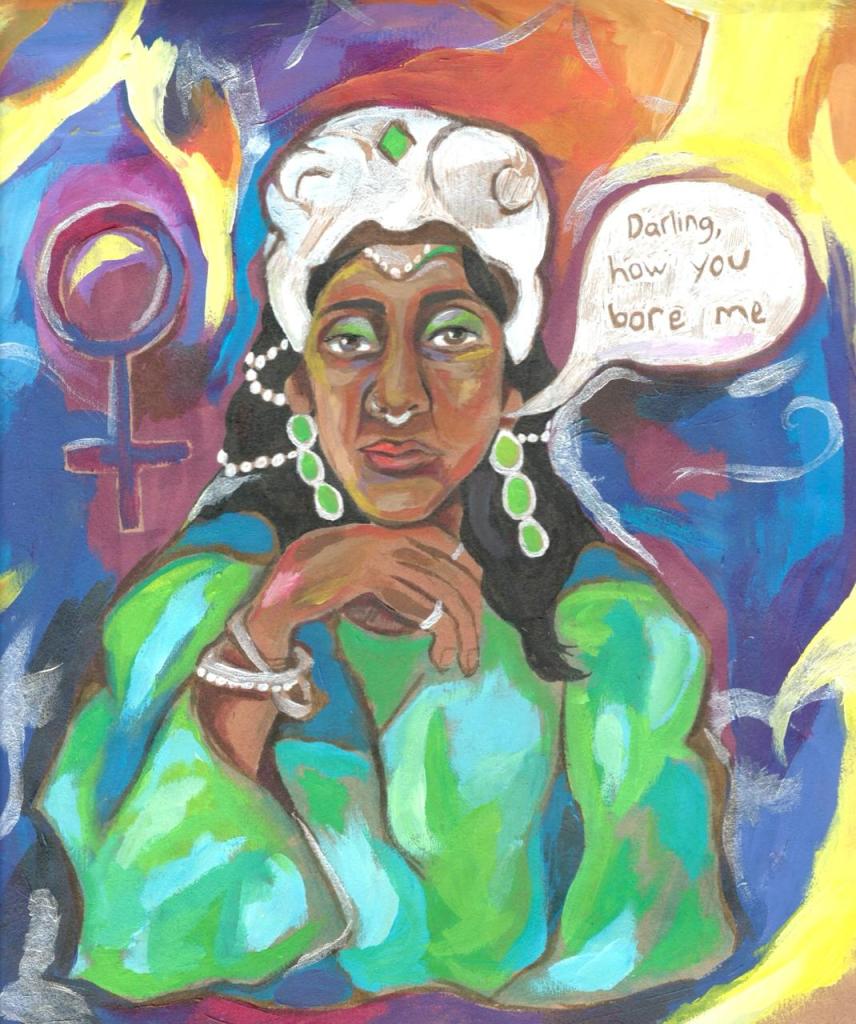
During a weeks-long party in the Persian empire, King Achashverosh demands that his Queen, Vashti, come before him and his men wearing her crown – and some say, in only her crown. Vashti refuses to expose her body to a group of lecherous drunk men, especially not when hosting her own party for the girls, the gays, and the theys. She stands up for herself and her body against patriarchal power. There is administrative fear that her actions would inspire other women to rebel, so she is exiled – and some say, executed.
Some Rabbis view her of noble and royal lineage, and as a reasonable counterpart to the vulgar and inconsiderate Achashverosh. Still, others see her as vain, cursed and Jew-hating, getting what she rightly deserved for her actions against Jewish women.
Similarly, Queen Vashti is both cited as a feminist icon for her refusal and just as often pitted against Esther. We refuse these limiting dichotomies, we embrace Queen Vashti in all her complexity
Megillah
| Esther 1:1 – 9 It happened in the days of Ahasuerus—that Ahasuerus who reigned over a hundred and twenty-seven provinces from India to Nubia. In those days, when King Ahasuerus occupied the royal throne in the fortress Shushan, In the third year of his reign, he gave a banquet for all the officials and courtiers—the administration of Persia and Media, the nobles and the governors of the provinces in his service. […] In addition, Queen Vashti gave a banquet for women, in the royal palace of King Ahasuerus. | אסתר 1:1 – 9 וַיְהִ֖י בִּימֵ֣י אֲחַשְׁוֵר֑וֹשׁ ה֣וּא אֲחַשְׁוֵר֗וֹשׁ הַמֹּלֵךְ֙ מֵהֹ֣דּוּ וְעַד־כּ֔וּשׁ שֶׁ֛בַע וְעֶשְׂרִ֥ים וּמֵאָ֖ה מְדִינָֽה׃ בַּיָּמִ֖ים הָהֵ֑ם כְּשֶׁ֣בֶת ׀ הַמֶּ֣לֶךְ אֲחַשְׁוֵר֗וֹשׁ עַ֚ל כִּסֵּ֣א מַלְכוּת֔וֹ אֲשֶׁ֖ר בְּשׁוּשַׁ֥ן הַבִּירָֽה׃ בִּשְׁנַ֤ת שָׁלוֹשׁ֙ לְמׇלְכ֔וֹ עָשָׂ֣ה מִשְׁתֶּ֔ה לְכׇל־שָׂרָ֖יו וַעֲבָדָ֑יו חֵ֣יל ׀ פָּרַ֣ס וּמָדַ֗י הַֽפַּרְתְּמִ֛ים וְשָׂרֵ֥י הַמְּדִינ֖וֹת לְפָנָֽיו׃ […] גַּ֚ם וַשְׁתִּ֣י הַמַּלְכָּ֔ה עָשְׂתָ֖ה מִשְׁתֵּ֣ה נָשִׁ֑ים בֵּ֚ית הַמַּלְכ֔וּת אֲשֶׁ֖ר לַמֶּ֥לֶךְ אֲחַשְׁוֵרֽוֹשׁ׃ |
| Esther 1:10 – 22 On the seventh day, when the king was merry with wine, he ordered Mehuman, Bizzetha, Harbona, Bigtha, Abagtha, Zethar, and Carcas, the seven eunuchs in attendance on King Ahasuerus, to bring Queen Vashti before the king wearing a royal diadem, to display her beauty to the peoples and the officials; for she was a beautiful woman. But Queen Vashti refused to come at the king’s command conveyed by the eunuchs. The king was greatly incensed, and his fury burned within him. Then the king consulted the sages learned in procedure. (For it was the royal practice [to turn] to all who were versed in law and precedent. His closest advisers were Carshena, Shethar, Admatha, Tarshish, Meres, Marsena, and Memucan, the seven ministers of Persia and Media who had access to the royal presence and occupied the first place in the kingdom.) “What,” [he asked,] “shall be done, according to law, to Queen Vashti for failing to obey the command of King Ahasuerus conveyed by the eunuchs?” Thereupon Memucan declared in the presence of the king and the ministers: “Queen Vashti has committed an offense not only against Your Majesty but also against all the officials and against all the peoples in all the provinces of King Ahasuerus. For the queen’s behavior will make all wives despise their husbands, as they reflect that King Ahasuerus himself ordered Queen Vashti to be brought before him, but she would not come. This very day the ladies of Persia and Media, who have heard of the queen’s behavior, will cite it to all Your Majesty’s officials, and there will be no end of scorn and provocation! “If it please Your Majesty, let a royal edict be issued by you, and let it be written into the laws of Persia and Media, so that it cannot be abrogated, that Vashti shall never enter the presence of King Ahasuerus. And let Your Majesty bestow her royal state upon another who is more worthy than she. Then will the judgment executed by Your Majesty resound throughout your realm, vast though it is; and all wives will treat their husbands with respect, high and low alike.” The proposal was approved by the king and the ministers, and the king did as Memucan proposed. Dispatches were sent to all the provinces of the king, to every province in its own script and to every nation in its own language, that every man should wield authority in his home and speak the language of his own people. | אסתר1:10 – 22 בַּיּוֹם הַשְּׁבִיעִי כְּטוֹב לֵב־הַמֶּלֶךְ בַּיָּיִן אָמַר לִמְהוּמָן בִּזְּתָא חַרְבוֹנָא בִּגְתָא וַאֲבַגְתָא זֵתַר וְכַרְכַּס שִׁבְעַת הַסָּרִיסִים הַמְשָׁרְתִים אֶת־פְּנֵי הַמֶּלֶךְ אֲחַשְׁוֵרוֹשׁ׃ לְהָבִיא אֶת־וַשְׁתִּי הַמַּלְכָּה לִפְנֵי הַמֶּלֶךְ בְּכֶתֶר מַלְכוּת לְהַרְאוֹת הָעַמִּים וְהַשָּׂרִים אֶת־יׇפְיָהּ כִּי־טוֹבַת מַרְאֶה הִיא׃ וַתְּמָאֵן הַמַּלְכָּה וַשְׁתִּי לָבוֹא בִּדְבַר הַמֶּלֶךְ אֲשֶׁר בְּיַד הַסָּרִיסִים וַיִּקְצֹף הַמֶּלֶךְ מְאֹד וַחֲמָתוֹ בָּעֲרָה בוֹ׃ וַיֹּאמֶר הַמֶּלֶךְ לַחֲכָמִים יֹדְעֵי הָעִתִּים כִּי־כֵן דְּבַר הַמֶּלֶךְ לִפְנֵי כׇּל־יֹדְעֵי דָּת וָדִין׃ וְהַקָּרֹב אֵלָיו כַּרְשְׁנָא שֵׁתָר אַדְמָתָא תַרְשִׁישׁ מֶרֶס מַרְסְנָא מְמוּכָן שִׁבְעַת שָׂרֵי פָּרַס וּמָדַי רֹאֵי פְּנֵי הַמֶּלֶךְ הַיֹּשְׁבִים רִאשֹׁנָה בַּמַּלְכוּת׃ כְּדָת מַה־לַּעֲשׂוֹת בַּמַּלְכָּה וַשְׁתִּי עַל אֲשֶׁר לֹא־עָשְׂתָה אֶת־מַאֲמַר הַמֶּלֶךְ אֲחַשְׁוֵרוֹשׁ בְּיַד הַסָּרִיסִים׃ {פ} וַיֹּאמֶר (מומכן) [מְמוּכָן] לִפְנֵי הַמֶּלֶךְ וְהַשָּׂרִים לֹא עַל־הַמֶּלֶךְ לְבַדּוֹ עָוְתָה וַשְׁתִּי הַמַּלְכָּה כִּי עַל־כׇּל־הַשָּׂרִים וְעַל־כׇּל־הָעַמִּים אֲשֶׁר בְּכׇל־מְדִינוֹת הַמֶּלֶךְ אֲחַשְׁוֵרוֹשׁ׃ כִּי־יֵצֵא דְבַר־הַמַּלְכָּה עַל־כׇּל־הַנָּשִׁים לְהַבְזוֹת בַּעְלֵיהֶן בְּעֵינֵיהֶן בְּאׇמְרָם הַמֶּלֶךְ אֲחַשְׁוֵרוֹשׁ אָמַר לְהָבִיא אֶת־וַשְׁתִּי הַמַּלְכָּה לְפָנָיו וְלֹא־בָאָה׃ וְהַיּוֹם הַזֶּה תֹּאמַרְנָה שָׂרוֹת פָּרַס־וּמָדַי אֲשֶׁר שָׁמְעוּ אֶת־דְּבַר הַמַּלְכָּה לְכֹל שָׂרֵי הַמֶּלֶךְ וּכְדַי בִּזָּיוֹן וָקָצֶף׃ אִם־עַל־הַמֶּלֶךְ טוֹב יֵצֵא דְבַר־מַלְכוּת מִלְּפָנָיו וְיִכָּתֵב בְּדָתֵי פָרַס־וּמָדַי וְלֹא יַעֲבוֹר אֲשֶׁר לֹא־תָבוֹא וַשְׁתִּי לִפְנֵי הַמֶּלֶךְ אֲחַשְׁוֵרוֹשׁ וּמַלְכוּתָהּ יִתֵּן הַמֶּלֶךְ לִרְעוּתָהּ הַטּוֹבָה מִמֶּנָּה׃ וְנִשְׁמַע פִּתְגָם הַמֶּלֶךְ אֲשֶׁר־יַעֲשֶׂה בְּכׇל־מַלְכוּתוֹ כִּי רַבָּה הִיא וְכׇל־הַנָּשִׁים יִתְּנוּ יְקָר לְבַעְלֵיהֶן לְמִגָּדוֹל וְעַד־קָטָן׃ וַיִּיטַב הַדָּבָר בְּעֵינֵי הַמֶּלֶךְ וְהַשָּׂרִים וַיַּעַשׂ הַמֶּלֶךְ כִּדְבַר מְמוּכָן וַיִּשְׁלַ֤ח סְפָרִים֙ אֶל־כׇּל־מְדִינ֣וֹת הַמֶּ֔לֶךְ אֶל־מְדִינָ֤ה וּמְדִינָה֙ כִּכְתָבָ֔הּ וְאֶל־עַ֥ם וָעָ֖ם כִּלְשׁוֹנ֑וֹ לִהְי֤וֹת כׇּל־אִישׁ֙ שֹׂרֵ֣ר בְּבֵית֔וֹ וּמְדַבֵּ֖ר כִּלְשׁ֥וֹן עַמּֽוֹ׃ |
Midrash
| Esther Rabbah 3:1 Rabbi Menaḥem, son-in-law of Rabbi Eliezer bar Avina, said in the name of Rabbi Yaakov bar Avina: The entire household of that wicked one are only judged naked. “You too, drink and be exposed naked” (Habakkuk 2:16), this is Nebuchadnezzar; “you too,” this is Belshatzar, “and be exposed naked,” this is Vashti. | רַבִּי מְנַחֵם חַתְנֵיהּ דְּרַבִּי אֱלִיעֶזֶר בַּר אֲבִינָא בְּשֵׁם רַבִּי יַעֲקֹב בַּר אֲבִינָא כָּל בֵּיתוֹ שֶׁל אוֹתוֹ רָשָׁע לֹא נִדּוֹנִים אֶלָּא עֲרֻמִּים (חבקוק ב, טז): שְׁתֵה גַּם אַתָּה וְהֵעָרֵל, זֶה נְבוּכַדְנֶצַּר. גַּם אַתָּה, זֶה בֵּלְשַׁצַּר. וְהֵעָרֵל, זוֹ וַשְׁתִּי. |
| Esther Rabbah 3:2 “Also, Vashti the queen made a women’s banquet in the royal palace of King Aḥashverosh” (Esther 1:9). Rabbi Yehuda son of Rabbi Simon began: “My people, its oppressors are babes and women govern them” (Isaiah 3:12). “My people, its oppressors are babes [meolel]” – they are exacting with them, as you say: “Do to them [veolel lamo] as You did to me” (Lamentations 1:22). Another interpretation: “Meolel” – they pick their unripe grapes [olelot]; that is what you say: “Your vineyard you shall not harvest completely [teolel]” (Leviticus 19:10). They come against them with false accusations [alilot]; that is what you say: “He made a false accusation [alilot devarim] against her” (Deuteronomy 22:14). Rabbi Yehuda son of Rabbi Simon said: There are [male] cult prostitutes among them; that is what you say: “There shall not be a cult prostitute from the daughters of Israel, and there shall not be a cult prostitute from the sons of Israel” (Deuteronomy 23:18); that is what you say: “They abused her [vayitallelu] all night” (Judges 19:25). “And women govern them” – four women assumed dominion in the world: Jezebel and Atalya from Israel, and Shemiramit and Vashti from the nations of the world. | גַּם וַשְׁתִּי הַמַּלְכָּה עָשְׂתָה מִשְׁתֵּה נָשִׁים (אסתר א, ט), רַבִּי יְהוּדָה בְּרַבִּי סִימוֹן פָּתַח (ישעיה ג, יב): עַמִּי נֹגְשָׂיו מְעוֹלֵל וְנָשִׁים מָשְׁלוּ בוֹ, עַמִּי נֹגְשָׂיו מְעוֹלֵל, מְדַקְדְּקִין בְּהוֹן, הָאֵיךְ מָה דְאַתְּ אָמַר (איכה א, כב): וְעוֹלֵל לָמוֹ. דָּבָר אַחֵר, מְעוֹלֵל, מְקַטְפִין עוֹלְלוֹתֵיהֶן, הָאֵיךְ מָה דְאַתְּ אָמַר (ויקרא יט, י): וְכַרְמְךָ לֹא תְעוֹלֵל. בָּאִין עֲלֵיהוֹן בַּעֲלִילוֹת, הָאֵיךְ מָה דְאַתְּ אָמַר (דברים כב, יד): וְשָׂם לָהּ עֲלִילֹת דְּבָרִים. וְרַבִּי יְהוּדָה בְּרַבִּי סִימוֹן אָמַר קְדֵשִׁים בְּהוֹן, הָאֵיךְ מָה דְאַתְּ אָמַר (דברים כג, יח): לֹא תִהְיֶה קְדֵשָׁה, הָאֵיךְ מָה דְאַתְּ אָמַר (שופטים יט, כה): וַיִּתְעַלְּלוּ בָהּ כָּל הַלַּיְלָה. וְנָשִׁים מָשְׁלוּ בוֹ, אָמַר רַבִּי חוֹנְיָא קוֹפְצִין עֲלֵיהֶן כְּבַעַל חוֹב. דָּבָר אַחֵר, וְנָשִׁים מָשְׁלוּ בוֹ, אַרְבַּע נָשִׁים נָטְלוּ מֶמְשָׁלָה בָּעוֹלָם, וְאֵלּוּ הֵן, אִיזֶבֶל וַעֲתַלְיָה מִיִּשְׂרָאֵל, וּשְׁמִירָמִית וּוַשְׁתִּי מֵאֻמּוֹת הָעוֹלָם. |
| Esther Rabbah 3:13 “To bring Queen Vashti before the king with a royal crown, to display her beauty to the peoples and the princes, for she was of fair appearance” (Esther 1:11). Rabbi Aivu said: The atonement of Israel is that when Israel eats, drinks, and rejoices, they bless, and praise, and acclaim The Holy One blessed be He. But when the nations of the world eat and drink, they engage in matters of lewdness. This one says: Medians are most beautiful; that one says: Persians are most beautiful. That foolish one [Aḥashverosh] said to them: ‘The vessel that this man uses [i.e., that I use] is neither Median nor Persian, but rather Chaldean. Do you wish to see it?’ They said to him: ‘Yes, provided that she be naked.’ He said to them: ‘Yes, and naked.’ Rabbi Pinḥas and Rabbi Ḥama bar Gurya say in the name of Rav: She sought to enter with only a sash, like a prostitute, and they would not let her. He [Aḥashverosh] said to us [her attendants]: ‘And naked.’ She said: ‘I will enter without a crown.’ ‘They will say that this is a maidservant.’ Even if she wears royal garments and enters [they will say she is a maidservant]. Rav Huna said: A commoner may not utilize royal garments. | לְהָבִיא אֶת וַשְׁתִּי הַמַּלְכָּה לִפְנֵי הַמֶּלֶךְ בְּכֶתֶר מַלְכוּת (אסתר א, יא), אָמַר רַבִּי אַיְּבוּ כַּפָּרָתָן שֶׁל יִשְׂרָאֵל, כְּשֶׁיִּשְׂרָאֵל אוֹכְלִין וְשׁוֹתִין וּשְׂמֵחִין, הֵן מְבָרְכִין וּמְשַׁבְּחִין וּמְקַלְּסִין לְהַקָּדוֹשׁ בָּרוּךְ הוּא, וּכְשֶׁאֻמּוֹת הָעוֹלָם אוֹכְלִין וְשׁוֹתִין, מִתְעַסְּקִין הֵן בְּדִבְרֵי תִּפְלוּת, זֶה אוֹמֵר מָדִיּוֹת נָאוֹת, וְזֶה אוֹמֵר פַּרְסִיּוֹת נָאוֹת. אָמַר לָהֶם אוֹתוֹ טִפֵּשׁ, כְּלִי שֶׁאוֹתוֹ הָאִישׁ מִשְׁתַּמֵּשׁ בּוֹ אֵינוֹ לֹא מָדִית וְלֹא פַּרְסִית אֶלָּא כַּשְׂדִּית, מְבַקְּשִׁים אַתֶּם לִרְאוֹתוֹ, אָמְרוּ לוֹ הֵן וּבִלְבָד שֶׁתְּהֵא עֲרֻמָּה, אָמַר לְהוֹן הֵן וַעֲרֻמָּה. רַבִּי פִּנְחָס וְרַבִּי חָמָא בַּר גּוּרְיָא בְּשֵׁם רַב אָמַר בִּקְּשָׁה לִכָּנֵס אֲפִלּוּ בְּצִלְצוּל כְּזוֹנָה וְלֹא הִנִּיחוּ אוֹתָהּ, אֲמַר לוֹן וַעֲרֻמָּה, אָמְרָה אֶכָּנֵס בְּלֹא כֶתֶר הֵן אוֹמְרִים שִׁפְחָה הִיא זוֹ, תִּלְבַּשׁ בִּגְדֵי מַלְכוּת וְתִכָּנֵס, אָמַר רַב הוּנָא אֵין הֶדְיוֹט מִשְׁתַּמֵּשׁ בְּבִגְדֵי מַלְכוּת. |
| Esther Rabba 3:14 “Queen Vashti refused to come at the king’s word by means of the officials, and the king was very angry, and his fury burned within him” (Esther 1:12). She sent and said to him things that upset him. She said to him: ‘If they consider me beautiful, they will set their sights on taking advantage of me and will kill you. If they consider me ugly, you will be demeaned because of me.’ She alluded, but he did not grasp the allusions; she provoked him, but he was not provoked. She sent and said to him: ‘Weren’t you the stable boy of my father’s house, and you were accustomed to bringing naked prostitutes before you, and now that you have ascended to the throne, you have not abandoned your corruption.’ She alluded, but he did not grasp the allusions; she provoked him, but he was not provoked. She sent and she said: ‘Even the opposition to my father’s house was not judged naked; that is what is written: “Then these men were bound in their trousers, their tunics, their hats”’ (Daniel 3:21). Rabbi Yudan said: In their robes. Rabbi Huna said: In their official garments. | וַתְּמָאֵן הַמַּלְכָּה וַשְׁתִּי (אסתר א, יב), שָׁלְחָה וְאָמְרָה לוֹ דְּבָרִים שֶׁהֵן נוֹגְעִין בְּלִבּוֹ, אָמְרָה לוֹ אִם רוֹאִין אוֹתִי נָאָה, הֵן נוֹתְנִין עֵינֵיהֶם לְהִשְׁתַּמֵּשׁ בִּי וְהוֹרְגִים אוֹתְךָ, וְאִם רוֹאִין אוֹתִי כְּעוּרָה, אַתְּ מִתְגַּנֶּה בִּי. רְמָזַתּוּ וְלֹא נִרְמָז עֲקָצַתּוּ וְלֹא נֶעֱקָץ, שָׁלְחָה וְאָמְרָה לוֹ קוֹמִיס אִיסְטַבְּלָאטִי שֶׁל בֵּית אַבָּא הָיִיתָ וְהָיִיתָ לָמוּד לִהְיוֹת מַכְנִיס לְפָנֶיךָ נָשִׁים זוֹנוֹת עֲרֻמּוֹת, וְעַכְשָׁיו שֶׁנִּכְנַסְתָּ לַמַּלְכוּת לֹא חָזַרְתָּ מִקִּלְקוּלְךָ, רְמָזַתּוּ וְלֹא נִרְמָז עֲקָצַתּוּ וְלֹא נֶעֱקָץ, שָׁלְחָה וְאָמְרָה, אֲפִלּוּ אַנְדִּתִיקוּס שֶׁל בֵּית אַבָּא לֹא נִדּוֹנוּ עֲרֻמִּים, הֲדָא הוּא דִכְתִיב (דניאל ג, כא): בֵּאדַיִן גֻּבְרַיָא אִלֵּךְ כְּפִתוּ בְּסַרְבָּלֵיהוֹן פַּטְּשֵׁיהוֹן. |
| Esther Rabbah 4:5 “According to the law, what shall be done to Vashti the queen, who has not done the bidding of Aḥashverosh the king [conveyed] by the officials?” (Esther 1:15). Rabbi Yitzḥak said: For a pig, according to the law, and for a holy nation, not according to the law, but with cruelty. “To Vashti the queen” – all the more so to a queen who is not Vashti. | כְּדָת מַה לַּעֲשׂוֹת (אסתר א, טו), אָמַר רַבִּי יִצְחָק לַחֲזִירְתָּה כְּדָת, וּלְאֻמָּה קְדוֹשָׁה שֶׁלֹא כַדָּת אֶלָּא בְּאַכְזָרִיּוּת. בַּמַּלְכָּה וַשְׁתִּי, עַל אַחַת כַּמָּה וְכַמָּה בַּמַּלְכָּה שֶׁאֵינָהּ וַשְׁתִּי. |
| Esther Rabbah 4:6 “Memukhan said before the king and the princes: It is not against the king alone that Vashti the queen has sinned; rather, it is against all the princes and all the peoples who are in all the provinces of Aḥashverosh the king” (Esther 1:16). What did Memukhan see that led him to leap and offer counsel first? [One can learn] from here that the ignorant leap first. Rabbi Pinḥas and Rabbi Ḥilkiya in the name of Rabbi Simon, and Rabbi Elazar, and Rabbi Yoḥanan. One said: Our legal system is like their legal system, and one said: Our legal system is not like their legal system. The one who said our legal system is like their legal system, it is as we learned (Sanhedrin 32a): In monetary laws, and in matters of ritual impurity and purity, one commences from the greatest judge. In capital laws, one commences from the side. The one who said that our legal system is not like their legal system, what is the significance of “Memukhan said?” [It is comparable to:] The statement of Rabbi Yehuda appears to be correct. [Likewise:] The statement of Memukhan appears to be correct. Rabbi Yoḥanan said there are three amora’im [who explained why Memukhan sought to depose Vashti]. One said: Because she would slap him with her slippers on this side and that. Another said: Because she did not invite his wife to the women’s banquet. And the other said: Because he had a daughter and he sought to marry her to royalty. The one who said: Because she would slap him with her slippers on this side and that, it is as he said: “It is not against the king alone that Vashti has committed an offense” (Esther 1:16). And the one who said: Because she did not invite his wife to the women’s banquet, it is as he said: “For the queen’s deed will get out to all the women, rendering their husbands contemptible in their eyes” (Esther 1:17); that [indicates that] she was not there. And the one who said: Because he had a daughter and he sought to marry her to royalty, as he said: “And may the king grant her queenship to another who is worthier than she” (Esther 1:19). | וַיֹּאמֶר מְמוּכָן לִפְנֵי הַמֶּלֶךְ וְהַשָֹּׂרִים (אסתר א, טז), מָה רָאָה מְמוּכָן לִקְפֹּץ בְּעֵצָה תְּחִלָּה, מִכָּאן שֶׁהֶדְיוֹט קוֹפֵץ בָּרֹאשׁ. רַבִּי פִּנְחָס וְרַבִּי חִלְקִיָּה בְּשֵׁם רַבִּי סִימוֹן וְרַבִּי אֶלְעָזָר וְרַבִּי יוֹחָנָן, חַד אָמַר דִּינֵינוּ כְּדִינֵיהֶם, וָחֳרִינָא אָמַר אֵין דִּינֵנוּ כְּדִינֵיהֶם, מַאן דְּאָמַר דִּינֵינוּ כְּדִינֵיהֶם, כְּדִתְנַן דִּינֵי מָמוֹנוֹת הַטְּהָרוֹת וְהַטֻּמְאוֹת מַתְחִילִין מִן הַגָּדוֹל, וְדִינֵי נְפָשׁוֹת מַתְחִילִין מִן הַצַּד. וּמַאן דְּאָמַר אֵין דִּינֵינוּ כְּדִינֵיהֶם, מַה מְּקַיֵּם וַיֹּאמֶר מְמוּכָן, נִרְאִין דִּבְרֵי רַבִּי יְהוּדָה נִרְאִין דִּבְרֵי מְמוּכָן. רַבִּי יוֹחָנָן אָמַר תְּלָתָא אָמוֹרָאִין, חַד אָמַר עַל יְדֵי שֶׁהָיְתָה מְסַטַּרְתּוֹ בַּקּוּרְדָּקִין שֶׁלָּהּ עַל פָּנָיו לְכָאן וּלְכָאן. וָחֳרִינָא אָמַר עַל יְדֵי שֶׁלֹא הִזְמִינָה אֶת אִשְׁתּוֹ לִסְעוּדַת נָשִׁים. וָחֳרִינָא אָמַר עַל יְדֵי שֶׁהָיְתָה לוֹ בַּת, וְהָיָה מְבַקֵּשׁ לְהַשִֹּׂיאָהּ לַמַּלְכוּת. מַאן דְּאָמַר עַל יְדֵי שֶׁהָיְתָה מְסַטַּרְתּוֹ בַּקּוּרְדָּקִין שֶׁלָּהּ עַל פָּנָיו לְכָאן וּלְכָאן, שֶׁאָמַר, לֹא עַל הַמֶּלֶךְ לְבַדּוֹ עָוְתָה וַשְׁתִּי הַמַּלְכָּה. וּמַאן דְּאָמַר עַל יְדֵי שֶׁלֹא הִזְמִינָה אֶת אִשְׁתּוֹ לַסְּעוּדַת נָשִׁים, שֶׁאָמַר כִּי יֵצֵא דְּבַר הַמַּלְכָּה עַל כָּל הַנָּשִׁים לְהַבְזוֹת בַּעְלֵיהֶן בְּעֵינֵיהֶן, הָדָא הִיא דְּלָא הֲוַת תַּמָּן. מַאן דְּאָמַר עַל יְדֵי שֶׁהָיְתָה לוֹ בַּת וְהָיָה מְבַקֵּשׁ לְהַשִֹּׂיאָהּ לַמַּלְכוּת, שֶׁאָמַר וּמַלְכוּתָהּ יִתֵּן הַמֶּלֶךְ לִרְעוּתָהּ הַטּוֹבָה מִמֶּנָּה. |
| Esther Rabbah 4:7 “For the queen’s deed will get out to all the women, making their husbands contemptible in their eyes; that King Aḥashverosh said to bring Queen Vashti before him, but she did not come” (Esther 1:17). Rav Shmuel said: Even without this, she needed [to be banished]. | כִּי יֵצֵא דְּבַר הַמַּלְכָּה (אסתר א, יז), אָמַר רַב שְׁמוּאֵל, בְּלָא דְּדֵין הֲוַת צְרִיכָה. |
| Esther Rabbah 4:8 “This day, the ladies of Persia and Media, who have heard of the queen’s deed, will tell it to all the king’s princes, and there will be no end [kedaiy] of humiliation and wrath” (Esther 1:18). Rav and Shmuel: Rav said: The humiliation is deserving [kedaiy] of this wrath. Shmuel said: The wrath is deserving [kedaiy] of this humiliation. Rabbi Ḥanina said: As her father dishonored the Temple vessels, the humiliation [of Vashti] is deserving of the wrath [that was its result], that was wrathful towards her and killed her. | וְהַיּוֹם הַזֶּה תֹּאמַרְנָה שָׂרוֹת פָּרַס (אסתר א, יח), רַב וּשְׁמוּאֵל, רַב אָמַר כְּדַי הַבִּזָּיוֹן הַזֶּה לַקְּצִיפָה הַזֹּאת. וּשְׁמוּאֵל אָמַר, כְּדַי הַקִּצָּפוֹן לְבִזָּיוֹן זֶה. אָמַר רַבִּי חֲנִינָא כְּדַאי הוּא הַבִּזָּיוֹן, שֶׁבִּיזָה אָבִיהָ אֶת כְּלֵי בֵּית הַמִּקְדָּשׁ, לַקִּצָּפוֹן, שֶׁקָּצַף עָלֶיהָ וַהֲרָגָהּ. |
| Esther Rabbah 4:9 “If it please the king, let a royal edict be issued before you, and let it be written into the laws of Persia and Media, so that it cannot be abrogated, that Vashti shall never [again] enter the presence of King Aḥashverosh, and may the king grant her queenship to another who is worthier than she” (Esther 1:19). He [Memukhan] said to him: ‘My master the king, let the word emerge from your mouth, and I will bring in her head in to you on a platter.’ “And let it be written into the laws of Persia and Media, so that it cannot be abrogated…” – Rabbi Ḥanina son of Rabbi Abbahu said: It is written: “For He causes pain and He bandages; He crushes and His hands heal” (Job 5:18). In the language that [announced that] the kingdom was being taken from her [Esther’s] ancestor, as Samuel said to him [Saul]: “And has given it to another, who is worthier than you” (I Samuel 15:28), in the same language, the kingdom was returned to him [to Saul, through his descendant Esther]; that is what is written: “And the king will give her queenship to another who is worthier than she” [that being Esther]. | אִם עַל הַמֶּלֶךְ טוֹב יֵצֵא דְּבַר מַלְכוּת (אסתר א, יט), אָמַר לוֹ אֲדוֹנִי הַמֶּלֶךְ דָּבָר אַתָּה מוֹצִיא מִפִּיךָ וַאֲנִי מַכְנִיס אֶת רֹאשָׁהּ בְּדִיסְקוּס, וְיִכָּתֵב בְּדָתֵי פָרַס וּמָדַי וְלֹא יַעֲבֹר וגו’. אָמַר רַבִּי חֲנִינָא בְּרֵיהּ דְּרַבִּי אַבָּהוּ, כְּתִיב (איוב ה, יח): כִּי הוּא יַכְאִיב וְיֶחְבָּשׁ יִמְחַץ וְיָדָו תִּרְפֶּינָה. בַּלָּשׁוֹן שֶׁנִּטְלָה מַלְכוּת מִזְּקֵנָהּ, שֶׁאָמַר לוֹ שְׁמוּאֵל (שמואל א טו, כח): וּנְתָנָהּ לְרֵעֲךָ הַטּוֹב מִמְּךָ, בּוֹ בַּלָּשׁוֹן חָזְרָה לוֹ הַמַּלְכוּת, הֲדָא הוּא דִכְתִיב: וּמַלְכוּתָהּ יִתֵּן הַמֶּלֶךְ לִרְעוּתָהּ הַטּוֹבָה מִמֶּנָּה. |
| Esther Rabbah 5:2 “After these matters, when the fury of king Aḥashverosh had abated, he remembered Vashti and what she had done, and what was decreed against her” (Esther 2:1). “After [aḥar] these matters, when the fury of King Aḥashverosh had abated” – Rabbi Aivu said in the name of Rabbi Yosei ben Zimra: Everywhere that aḥar is stated, it means just after; aḥarei – significantly after. The Rabbis in the name of Rabbi Yosei ben Zimra: Everywhere that aḥarei is stated, it means just after; aḥar – significantly after. “When [keshokh] the fury of King Aḥashverosh had abated,” beshokh is not written here, but rather keshokh, abatement that is not abatement. “He remembered Vashti” – that decree that he had decreed for her to enter naked before him and she did not enter he became angry and killed her. Once he had killed her, he began regretting it. Why? Because she had behaved correctly. “And what was decreed against her,” unjustly. Why did this befall her? Because she would not allow Aḥashverosh to grant permission to build the Temple, saying to him: You are seeking to build what my ancestors destroyed? “The king’s lads, his attendants, said…” (Esther 2:2). | אַחַר הַדְּבָרִים הָאֵלֶּה כְּשֹׁךְ חֲמַת הַמֶּלֶךְ אֲחַשְׁוֵרוֹשׁ (אסתר ב, א), אָמַר רַבִּי אַיְּבוּ בְּשֵׁם רַבִּי יוֹסֵי בֶּן זִמְרָא כָּל מָקוֹם שֶׁנֶּאֱמַר אַחַר סָמוּךְ, אַחֲרֵי מוּפְלָג. וְרַבָּנָן מִשּׁוּם רַבִּי יוֹסֵי בֶּן זִמְרָא כָּל מָקוֹם שֶׁנֶּאֱמַר אַחֲרֵי סָמוּךְ, אַחַר מוּפְלָג. כְּשׁךְ חֲמַת הַמֶּלֶךְ אֲחַשְׁוֵרוֹשׁ, בְּשֹׁךְ אֵין כְּתִיב כָּאן אֶלָּא כְּשֹׁךְ, שְׁכִיכָה שֶׁאֵינָהּ שְׁכִיכָה. זָכַר אֶת וַשְׁתִּי, גְּזֵרָה זֹאת שֶׁגָּזַר עָלֶיהָ שֶׁתִּכָּנֵס לְפָנָיו עֲרֻמָּה וְלֹא נִכְנְסָה וְקָצַף עָלֶיהָ וַהֲרָגָהּ, מִן דְּקָטְלָה שָׁרֵי תָּהֵי בֵיהּ [חוזר בו], לָמָּה, שֶׁעָשְׂתָה כְּהֹגֶן. וְאֵת אֲשֶׁר נִגְזַר עָלֶיהָ, שֶׁא כְּהֹגֶן. וְלָמָּה עָלְתָה לָהּ כָּךְ, לְפִי שֶׁלֹא הָיְתָה מַנַּחַת לַאֲחַשְׁוֵרוֹשׁ לִתֵּן רְשׁוּת לִבְנוֹת בֵּית הַמִּקְדָּשׁ, וְאוֹמֶרֶת לוֹ, מַה שֶּׁהֶחֱרִיבוּ אֲבוֹתַי אַתָּה מְבַקֵּשׁ לִבְנוֹת, וַיֹּאמְרוּ נַעֲרֵי הַמֶּלֶךְ מְשָׁרְתָיו וגו’. |
Talmud
| Tractate Megillah 12b:3 The Gemara continues to detail what occurred at the feast. So too, at the feast of that wicked man, Ahasuerus, when the men began to converse, some said: The Median women are the most beautiful, while others said: The Persian women are the most beautiful. Ahasuerus said to them: The vessel that I use, i.e., my wife, is neither Median nor Persian, but rather Chaldean. Do you wish to see her? They said to him: Yes, provided that she be naked, for we wish to see her without any additional adornments. | וְכֵן בִּסְעוּדָּתוֹ שֶׁל אוֹתוֹ רָשָׁע, הַלָּלוּ אוֹמְרִים: מָדִיּוֹת נָאוֹת, וְהַלָּלוּ אוֹמְרִים: פָּרְסִיּוֹת נָאוֹת. אָמַר לָהֶם אֲחַשְׁוֵרוֹשׁ: כְּלִי שֶׁאֲנִי מִשְׁתַּמֵּשׁ בּוֹ, אֵינוֹ לֹא מָדִיִּי וְלֹא פָּרְסִי אֶלָּא כַּשְׂדִּיִּי, רְצוֹנְכֶם לִרְאוֹתָהּ? אָמְרוּ לוֹ: אִין, וּבִלְבַד שֶׁתְּהֵא עֲרוּמָּה. |
| Tractate Megillah 12b:4 The Gemara comments: Vashti was punished in this humiliating way for it is with the measure that a man measures to others that he himself is measured. In other words, God punishes individuals in line with their transgressions, measure for measure. This teaches that the wicked Vashti would take the daughters of Israel, and strip them naked, and make them work on Shabbat. Therefore, it was decreed that she be brought before the king naked, on Shabbat. This is as it is written: “After these things, when the wrath of King Ahasuerus was appeased, he remembered Vashti, and what she had done, and what was decreed against her” (Esther 2:1). That is to say, just as she had done with the young Jewish women, so it was decreed upon her. | שֶׁבַּמִּדָּה שֶׁאָדָם מוֹדֵד — בָּהּ מוֹדְדִין לוֹ, מְלַמֵּד שֶׁהָיְתָה וַשְׁתִּי הָרְשָׁעָה מְבִיאָה בְּנוֹת יִשְׂרָאֵל וּמַפְשִׁיטָתָן עֲרוּמּוֹת וְעוֹשָׂה בָּהֶן מְלָאכָה בְּשַׁבָּת. הַיְינוּ דִּכְתִיב: ״אַחַר הַדְּבָרִים הָאֵלֶּה כְּשׁוֹךְ חֲמַת הַמֶּלֶךְ אֲחַשְׁוֵרוֹשׁ זָכַר אֶת וַשְׁתִּי וְאֵת אֲשֶׁר עָשָׂתָה וְאֵת אֲשֶׁר נִגְזַר עָלֶיהָ״, כְּשֵׁם שֶׁעָשָׂתָה — כָּךְ נִגְזַר עָלֶיהָ. |
| Tractate Megillah 12b:5 The verse states: “But the queen Vashti refused to come” (Esther 1:12). The Gemara asks: Since she was immodest, as the Master said above: The two of them had sinful intentions, what is the reason that she did not come? Rabbi Yosei bar Ḥanina said: This teaches that she broke out in leprosy, and therefore she was embarrassed to expose herself publicly. An alternative reason for her embarrassment was taught in a baraita: The angel Gabriel came and fashioned her a tail. | ״וַתְּמָאֵן הַמַּלְכָּה וַשְׁתִּי״. מִכְּדֵי פְּרִיצְתָּא הֲוַאי, דְּאָמַר מָר: שְׁנֵיהֶן לִדְבַר עֲבֵירָה נִתְכַּוְּונוּ, מַאי טַעְמָא לָא אֲתַאי? אָמַר רַבִּי יוֹסֵי בַּר חֲנִינָא: מְלַמֵּד שֶׁפָּרְחָה בָּהּ צָרַעַת. בְּמַתְנִיתָא תָּנָא: [בָּא גַּבְרִיאֵל וְעָשָׂה לָהּ זָנָב]. |
| The verse continues: “Therefore the king was very wrathful, and his anger burned in him” (Esther 1:12). The Gemara asks: Why did his anger burn in him so greatly merely because she did not wish to come? Rava said: Vashti not only refused to come, but she also sent him a message by way of a messenger: You, son of my father’s stableman [ahuriyyarei]. Belshazzar, my father, drank wine against a thousand men and did not become inebriated, as the verse in Daniel (5:1) testifies about him: “Belshazzar the king made a great feast to a thousand of his lords, and drank wine before the thousand”; and that man, referring euphemistically to Ahasuerus himself, has become senseless from his wine. Due to her audacity, immediately “his anger burned in him” (Esther 1:12). | ״וַיִּקְצֹף הַמֶּלֶךְ מְאֹד״. אַמַּאי דְּלַקָה בֵּיהּ כּוּלֵּי הַאי? אָמַר רָבָא, שְׁלַחָה לֵיהּ: בַּר אַהוּרְיָירֵיהּ דְּאַבָּא, אַבָּא לָקֳבֵל אַלְפָּא חַמְרָא שָׁתֵי וְלָא רָוֵי, וְהָהוּא גַּבְרָא אִשְׁתַּטִּי בְּחַמְרֵיהּ, מִיָּד: ״וַחֲמָתוֹ בָּעֲרָה בוֹ״. |
Modern Comentary
Breaking Free of the Esther/Vashti Complex by Alan Robert Ginsberg
Call it the “Esther/Vashti Complex” — the perennial Purim impulse to define Esther and Vashti against each other as foils, opposites, rivals, or enemies.
They were none of these. This false dichotomy has been superimposed on the narrative, enduring through the ages, reducing the women to two-dimensional figures, robbing them of the dignity of human complexity. It obscures a story of female empowerment behind a mask of misogyny.
For 25 centuries, scholars, rabbis and other thinkers have tried to pit two courageous women against each other, depicting Vashti as wicked and Esther as angelic, venerating Esther by vilifying Vashti.
But Harriet Beecher Stowe praised Vashti as early as 1878 for standing up for women’s rights, and Elizabeth Cady Stanton applauded Vashti’s defiant resistance in 1898. In recent decades it has become increasingly fashionable to vindicate Vashti and even to devalue Esther with faint praise or outright scorn. “Vashti fights for her modesty and her honor, while our heroine Esther is willing to work through the bedroom,” writes Rabbi Ruhama Weiss. Isabel Kaplan derides Esther for having “slept her way to the top.” Scriptural slut-shaming seems particularly ill-advised and retrograde.
Not only were Esther and Vashti never adversaries, there is historical evidence to suggest they were the same woman. The next time you thumb through ancient secular sources such as “The Histories” by Herodotus or Plato’s account of Socrates’ dialogue with Alcibiades, you’ll notice they name only one woman, Amestris, as the wife of Xerxes, the Persian king identified with Ahasuerus.
Drop the “V” from Vashti and the “Am” from Amestris, and it’s not much of a stretch from the remaining “ashti” and “estris” to “Esther.” Etymologies reaching back to ancient Greek, Persian, Babylonian and Hebrew are complex and uncertain at best. Esther derives from Ishtar, a Greek goddess and “star.” Vashti and Amestris also share roots.
Esther and Vashti contend with the same husband, the same patriarchal authority. They never appear together, or even at the same time. For interpretive purposes, we may conclude that they were two women of valor. Or one.
Ahasuerus throws a party, a six-month government shutdown to energize his base. Wine is served in vessels of gold. The décor is garish.
Later, the king convenes a smaller party of cronies, patrons, sycophants and generals while Queen Vashti fêtes the real housewives of Shushan’s noblest families.
The king orders Vashti to abandon her female posse and her dignity, and dance naked in front of the men. Vashti refuses.
Ahasuerus can have Vashti brought to him by force. But he needs her to appear voluntarily so he can seem like a benevolent husband with a loving, compliant wife. Vashti’s refusal shatters the illusion.
Ahasuerus spins his personal embarrassment as a political question. He asks his advisers what to do. Vashti’s defiance — a courageous declaration of self-ownership — terrifies the king’s men. They fear that Vashti’s chutzpah will inspire their wives to rebel and disobey.
Vashti is banished. Details are sketchy. Perhaps she is simply relegated to the king’s harem, hidden from the public and banned from the royal bedroom.
Ahasuerus is left embarrassed and alone.
A search for Vashti’s replacement commences with young women commanded to compete for the role, sequestered in the palace, bathed in frankincense and myrrh. Each woman spends a night on the king’s casting couch. There can be only one leading lady. After, uh, auditioning them all, the king will anoint his favorite.
This process is described as a beauty contest. The winner will wear the royal crown that provided no honor and no protection to Vashti. These women will be raped and enslaved as concubines. (How strenuously we must avert our attention from these sordid details to maintain the fairy-tale illusions we associate with this happy holiday.)
Esther is conscripted into this beauty contest by her cousin and guardian Mordecai. She is the orphaned daughter of his uncle. Having raised Esther from childhood, Mordecai offers her to the king. This act is troubling, to put it mildly.
But Esther is a strategic thinker. She enters the contest without protest. Esther gives Ahasuerus what Vashti refused him — in private, not in front of an audience. What she chooses to reveal is superficial. She conceals her Jewish identity.
The king requires Esther to agree to remain obedient, an ironic legacy of Vashti’s refusal. Esther formally consents. Perhaps this is a sadder but wiser Vashti, transformed into the savvy Esther, pursuing a new strategy.
Ahasuerus decrees a festival to honor the new queen. He never asks Esther to dance. To win popularity, he cuts taxes.
Meanwhile, Haman wants the world to bow to him. Mordecai won’t bow. And when Mordecai discovers a plot to assassinate the king, he sends a warning through Esther, earning the king’s gratitude and Haman’s wrath. Haman then plans to kill all the Jews.
Mordecai wants Esther to get the king to prevent the pogrom. But even the queen may not visit the king unless he summons her. Aware of what happened to Vashti, Esther hesitates to approach the erratic king. Mordecai argues that self-preservation and Jewish solidarity compel her to act.
So, Esther presents herself to the king. He invites her to approach and kiss his scepter. She complies. We pretend not to understand. The visit is conjugal. It’s been a month since husband and wife last saw each other.
As it turns out, the king is delighted that his wife took the initiative. The now-uxorious Ahasuerus protects Esther as he failed to protect Vashti. Esther has won a victory on the metaphorical battlefield where Vashti fell.
Haman is then hung from the gallows he built for Mordecai. Enabled by Esther, the Jews defend their lives.
Esther takes the baton of female empowerment passed by Vashti. Or, if you prefer, Vashti reemerges as Esther. The Jewish people get a seat at the table of power. The tradition of matrilineal descent in intermarriage affords Esther the prospect of bearing children who will be Jewish Persian royalty.
On Purim we drink wine until we cannot tell the difference between Mordecai and Haman. Better to drink wine until we cannot tell the difference between Esther and Vashti, and break free of the Esther/Vashti Complex.
The Esther/Vashti Purim Flag By Rabbi Tamara Cohen
Megillat Esther has been understood as a fantasy of Jewish power written in a time of Jewish powerlessness. But the megillah actually tells two parallel stories. The primary story is about how Jews in the Diaspora became victims to the whims of power, and then, in the “happy” conclusion, the victors. The secondary story, a story about women and men, follows a similar course, beginning with a wife who is banished when she refuses to obey her husband and concluding with a wife who is listened to and given a significant amount of power. In both stories edicts are issued that threaten the rights of an entire group–Jews and women. Both edicts are eventually subverted through the cunning and courage of Esther and Mordecai. Yet, only one of these subversions is celebrated in our communal observance of Purim.
With the new ritual of waving Esther/Vashti Purim flags, we encourage our communities to celebrate and more deeply explore both of Purim’s stories. Purim thus becomes both a celebration of and reflection on Jewish pride and perseverance and an opportunity to honor women’s power in the face of those who fear it.
he central ritual of Purim is the reading of the megillah. During the megillah reading we call attention to Haman, the story’s villain, through the spinning of gragers intended to drown out his name. We highlight the role of Mordecai by joining with the entire congregation in reciting four verses of the megillah out loud. These verses introduce Mordecai (Esther 2:5), accentuate the moment of his parading before the king in royal apparel (8:15-16) and tell of his new role as deputy to the king at the conclusion of the story (10:3). These two customs–the gragger and the recitation of the four verses–serve to ritually emphasize the characters of Haman and Mordecai as the central actors of the story.
Currently, the rituals and symbols associated with Purim do not evoke either Esther or Vashti. At least symbolically, the fact that the grager and its noise are the prominent symbols and sounds of Purim serve to put Haman, hatred, and sometimes valorization of violent retribution at the center of communal celebrations of Purim. Even though the purpose of the gragger is to drown out Haman’s name, in actuality it reifies his presence in the sanctuary. Synagogue is a place where both children and adults are usually called to listen. Suddenly, on Purim we are allowed, even encouraged, to make so much noise that a certain word will not be heard.
The commandment on Purim is to listen to every word of the megillah, but the custom of the gragger often threatens that commandment, especially because the drowning out is more fun than the listening. Compared to the shofar (ram’s horn) which we are commanded to listen to on Rosh Hashannah and which serves as a symbol of awakening, gathering, and proclaiming freedom, the grager is a negative sound. It is the opposite of listening.
In contrast, the primary purpose of the Purim flag is to call attention to Esther and Vashti and make it fun to listen for their names. But the Purim flag offers us an opportunity to do more than balance our attention to men’s names with attention to women’s names; it does more than allow us an opportunity for some feminist fun. When we wave our flags at the mention of Vashti and Esther’s names we begin to shift the focus of Purim. No longer do we need to accept that the opposition of “blessed Mordecai” and “cursed Haman” encompasses the story of Purim or the story of Jewish experience. By focusing on Vashti and Esther, as well as Haman and Mordecai, we open up the possibility of telling a more complete and complex Purim story, a story that includes the experiences of women and a story that honors the possibility of potential alliances between Jews and non-Jews.
By placing Esther and Vashti on the same flag, we are also challenging ourselves to move beyond the dichotomy of bad queen/good queen (and good feminist/bad feminist) and embrace a wider spectrum of possibility for women’s leadership. For much of Jewish interpretive tradition, Vashti was the bad queen and Esther the good one. Then, in the early days of Jewish feminism, Vashti was resurrected and celebrated for her open defiance of the king and her powerful defense of her body and sexuality. Not surprisingly, as Vashti’s popularity grew, Esther fell out of favor. Feminists were not sure they could accept two different models of powerful women. For some, Esther suddenly became a negative symbol for all women who use their sexuality, enjoy their beauty, fear confrontation, and remain married to power. These interpretations of Esther minimized her courage in directly confronting both Ahasuerus and Haman, and in “coming out” as a Jew after years of hiding her identity. They also ignore Esther’s powerful role as an innovator of communal ritual action in her calling for a public fast.
With these Purim flags we hope to move away from the paradigms of good ‘girl’/bad ‘girl’ and good feminist/bad feminist to explore–through art and our experience of it–the relationship between Esther and Vashti and all that they have come to symbolize. Celebrating Vashti along with Esther also gives us a ritual-means to balance the antagonism inspired by Haman with a celebration of how much we have to gain by listening and not simply blotting out.
Vashti is not evil like Haman or a fool like Ahasuerus. She is a non-Jewish woman who because of her own suffering at the hands of the more powerful has much in common with both Mordecai and Esther and can therefore serve, on a narrative and symbolic level as a teacher, model and ally.
I began this essay by pointing out that Megillat Esther has been seen as a fantasy of Jewish power that emerged in a time of Jewish powerlessness. We who read the megillah in a time of unprecedented Jewish power both in the State of Israel and in the United States, are thus in need of ritual ways of wrestling with the megillah in order to figure out its meaning for our time. As feminists committed to honoring Esther’s leadership, we cannot ignore the fact that it is Esther who asks the king for an additional day on which the Jews can kill their enemies–“the armed force together with women and children” (Esther 8.11, 9.13). While we proudly wave a flag bearing her name, we must challenge ourselves to find a way to celebrate Esther’s power without necessarily endorsing the violence she authorizes. Perhaps this is another reason for our pairing of Esther and Vashti–once we link the stories of this Jewish and non-Jewish queen we are on the way to recognizing the linked fates of their peoples. When we unite Esther who ends up as a powerful queen with Vashti who by the end of the story is absent and therefore powerless, we can begin to grasp the necessity of balancing the need to exercise power with the need to share it.
It is time for us to make room in our myths and in our communities for more than one model of leadership. It is time for us to learn from both Esther and Vashti, from both the Jewish women in our texts and the non-Jewish women (and men). It is time to celebrate women’s power and to question the ways we have wielded it over others. And, with humor and deep conviction, it is time for us to take the holiday of Purim and, through new ritual, use it to tell our community a new story about who we are, what we value, and what we need to do to build a better world.
This is Debbie Friedman’s “Vashti’s Song”. It was released on her 1990 album “Live at the Del” (https://www.discogs.com/master/2840101-Debbie-Friedman-Live-At-The-Del)
This 2019 song “I’m Done Dressing Up for You” is by Alicia Jo Rabins and is part of her “Girls in Trouble” series. Lyrics are here: https://www.girlsintroublemusic.com/songs/im-done-dressing-up/
From Beth El original Purim spiel, Vashti Was Right
From Beth El original Purim spiel; The Book of Zeresh
