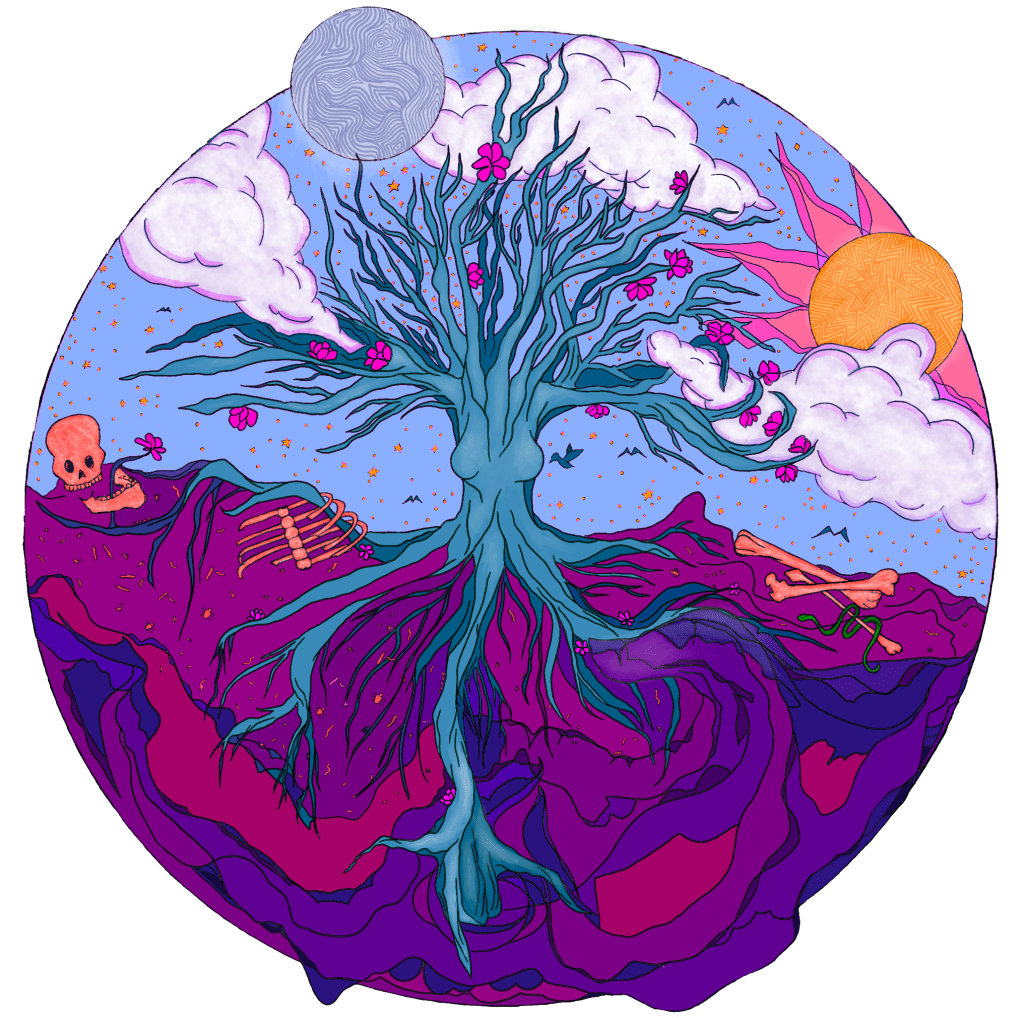
Breishit Barah Elohim L’Ezmam | In the beginning, G-d created: Themself – Multitudinous! Creator of all – beyond gender but also full of gender!!! Sometimes Father, sometimes Mother, sometimes groom, sometimes bride! Breaks Themselves open to build, desires not to be alone, struggles with clear communication, creates new forms of relationships, asks us to strive to see the Divine in all!
TaNaKh
| English | Hebrew |
| Genesis 1:1 When God began to create heaven and earth | בראשית א:א בְּרֵאשִׁ֖ית בָּרָ֣א אֱלֹהִ֑ים אֵ֥ת הַשָּׁמַ֖יִם וְאֵ֥ת הָאָֽרֶץ |
| Genesis 1:26-1:27 And God said, “Let us make humankind in our image, after our likeness. They shall rule the fish of the sea, the birds of the sky, the cattle, the whole earth, and all the creeping things that creep on earth.” And God created humankind in the divine image, creating it in the image of God— creating them male and female. | בראשית א:כו–כז וַיֹּ֣אמֶר אֱלֹהִ֔ים נַֽעֲשֶׂ֥ה אָדָ֛ם בְּצַלְמֵ֖נוּ כִּדְמוּתֵ֑נוּ וְיִרְדּוּ֩ בִדְגַ֨ת הַיָּ֜ם וּבְע֣וֹף הַשָּׁמַ֗יִם וּבַבְּהֵמָה֙ וּבְכל־הָאָ֔רֶץ וּבְכל־הָרֶ֖מֶשׂ וַיִּבְרָ֨א אֱלֹהִ֤ים ׀ אֶת־הָֽאָדָם֙ בְּצַלְמ֔וֹ בְּצֶ֥לֶם אֱלֹהִ֖ים בָּרָ֣א אֹת֑וֹ זָכָ֥ר וּנְקֵבָ֖ה בָּרָ֥א אֹתָֽםהָֽרֹמֵ֥שׂ עַל־הָאָֽרֶץ׃ |
| Exodus 3:13-14 Moses said to God, “When I come to the Israelites and say to them, ‘The God of your fathers’ [house] has sent me to you,’ and they ask me, ‘What is [God’s] name?’ what shall I say to them?” And God said to Moses, “Ehyeh-Asher-Ehyeh,”1 continuing, “Thus shall you say to the Israelites, ‘Ehyeh sent me to you.’ | שמות ג:יג–יד וַיֹּ֨אמֶר מֹשֶׁ֜ה אֶל־הָֽאֱלֹהִ֗ים הִנֵּ֨ה אָנֹכִ֣י בָא֮ אֶל־בְּנֵ֣י יִשְׂרָאֵל֒ וְאָמַרְתִּ֣י לָהֶ֔ם אֱלֹהֵ֥י אֲבוֹתֵיכֶ֖ם שְׁלָחַ֣נִי אֲלֵיכֶ֑ם וְאָֽמְרוּ־לִ֣י מַה־שְּׁמ֔וֹ מָ֥ה אֹמַ֖ר וַיֹּ֤אמֶר אֱלֹהִים֙ אֶל־מֹשֶׁ֔ה אֶֽהְיֶ֖ה אֲשֶׁ֣ר אֶֽהְיֶ֑ה וַיֹּ֗אמֶר כֹּ֤ה תֹאמַר֙ לִבְנֵ֣י יִשְׂרָאֵ֔ל אֶֽהְיֶ֖ה שְׁלָחַ֥נִי אֲלֵיכֶֽם׃אֲלֵהֶֽם׃ |
| Exodus 25:8 They shall make a Sanctuary for Me, and I will dwell in their midst [rest My Shechina among them]. | שמות כה:ח וְעָ֥שׂוּ לִ֖י מִקְדָּ֑שׁ וְשָׁכַנְתִּ֖י בְּתוֹכָֽם |
Talmud
| English | Hebrew |
| Shevuot 35a:27 Is that to say that gracious and compassionate are sacred names? The Gemara raises a contradiction from a baraita: There are names of God that may be erased and there are names of God that may not be erased due to their inherent sanctity. These are names that may not be erased: For example, several variations of the name God [Elohim]: El, Elohekha with a second person singular suffix, Elohim, Eloheikhem with a second person plural suffix; I Shall Be As I Shall Be, alef dalet, yod heh, Almighty [Shaddai], Lord of Hosts [Tzevaot], these names may not be erased | שבועות לה א:כז למימרא דחנון ורחום שמות נינהו ורמינהי יש שמות שנמחקין ויש שמות שאין נמחקין אלו הן שמות שאין נמחקין כגון אל אלהיך אלהים אלהיכם אהיה אשר אהיה אלף דלת ויוד הי שדי צבאות הרי אלו אין נמחקין |
Kabalah
| English | Aramaic |
| Zohar 2:100b2 The Shekhinah is sometimes called Daughter and sometimes Sister and here she is called Mother and she is indeed all of these. | ספר הזהר ב:ק שֶׁעִטְּרָה לוֹ אִמּוֹ, הָא תָּנֵינָן, קָרֵי לָהּ בַּת, וְקָרֵי לָהּ אָחוֹת, קָרֵי לָהּ אֵם, וְכֹלָּא אִיהוּ. |
Contemporary
Joy Ladin, Both Promised Land and Wilderness
It may seem anachronistic or heretical to call the God we encounter in the Torah “queer.” But when I call God queer, I’m in part drawing on an older understanding of the word, which has been used for centuries to refer to identities that don’t fit established norms and categories. The Torah’s God is disembodied, incomparable, and incomprehensible in human terms. Judaism, Christianity, and Islam developed theologies based on the God we encounter in the Torah, but by Iron Age standards, this God is utterly queer.
Later Jewish traditions and texts normalize this queer God, imagining God as a king or emperor surrounded by an angelic court, But the God we encounter in the five books of Moses has no normalizing context, no divine hierarchy to define God’s kingship, no divine family for God to patriarchally dominate, no consort, and no body. As a result, despite the masculine pronouns and verb forms assigned by the text, God has no gender, masculine or otherwise, because God has no way to demonstrate or perform a gender, Gender is a system; even the simplest form of that system, the gender binary, requires at least two of a kind, and God, as Jews affirm in the Shema prayer, is One.
And, as many of us know, being singular, living outside recognized human categories and relationships, makes one very queer indeed.
