Zealot-turned-messenger who roams the earth, a placeless stranger at many tables; he’s bringing mashiach! It’s Eliyahu Ha’navi!
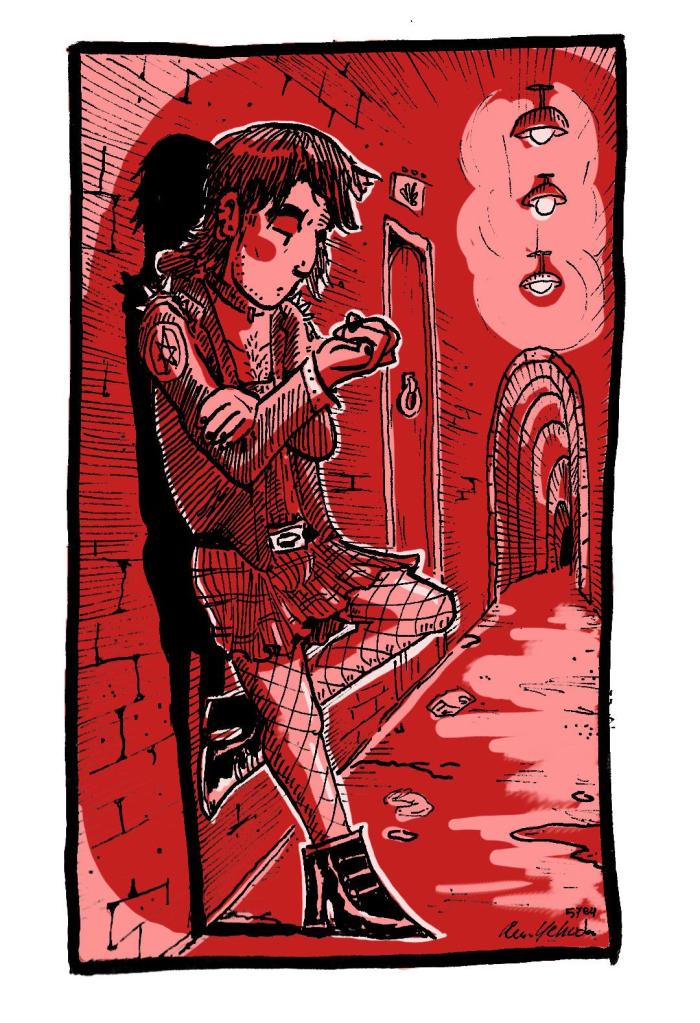
He’s a famously genderqueer character who speaks the fire in his heart and struggles to listen to the still small voice, which insists on speaking to him. Eliyahu HaNavi appears in Talmudic texts not only as the preamble to mashiach, but also disguised in many forms. He appears in rabbinic literature as a beggar, as an old woman. He wears many outfits: rags and skirts, undercuts and makeup. We meet Eliyahu in the darkest, most abandoned places. He reminds us that mashiach is just around the corner, olam habah just a little closer, if only we’d work to bring it.
Art by @rena.yehuda
TaNaKh
| I Kings 19:19-21 (Eliyahu + Elisha <3) He set out from there and came upon Elisha son of Shaphat as he was plowing. There were twelve yoke of oxen ahead of him, and he was with the twelfth. Elijah came over to him and threw his mantle over him.1 He left the oxen and ran after Elijah, saying: “Let me kiss my father and mother good-by, and I will follow you.”2 And he answered him, “Go back. What have I done to you?” He turned back from him and took the yoke of oxen and slaughtered them; he boiled their meat with the gear of the oxen and gave it to the people, and they ate. Then he arose and followed Elijah and became his attendant. II Kings 2:2 (again in 2:4 and 2:6) Elijah said to Elisha, “Stay here, for GOD has sent me on to Bethel.” “As GOD lives and as you live,” said Elisha, “I will not leave you.” So they went down to Bethel. II Kings 2:9 As they were crossing, Elijah said to Elisha, “Tell me, what can I do for you before I am taken from you?” Elisha answered, “Let a double portion of your spirit pass on to me.” | מלכים א י׳׳ט: י׳׳ט–כ׳׳א וַיֵּ֣לֶךְ מִ֠שָּׁ֠ם וַיִּמְצָ֞א אֶת־אֱלִישָׁ֤ע בֶּן־שָׁפָט֙ וְה֣וּא חֹרֵ֔שׁ שְׁנֵים־עָשָׂ֤ר צְמָדִים֙ לְפָנָ֔יו וְה֖וּא בִּשְׁנֵ֣ים הֶעָשָׂ֑ר וַיַּעֲבֹ֤ר אֵלִיָּ֙הוּ֙ אֵלָ֔יו וַיַּשְׁלֵ֥ךְ אַדַּרְתּ֖וֹ אֵלָֽיו׃ וַיַּעֲזֹ֣ב אֶת־הַבָּקָ֗ר וַיָּ֙רׇץ֙ אַחֲרֵ֣י אֵלִיָּ֔הוּ וַיֹּ֗אמֶר אֶשְּׁקָה־נָּא֙ לְאָבִ֣י וּלְאִמִּ֔י וְאֵלְכָ֖ה אַחֲרֶ֑יךָ וַיֹּ֤אמֶר לוֹ֙ לֵ֣ךְ שׁ֔וּב כִּ֥י מֶה־עָשִׂ֖יתִי לָֽךְ׃ וַיָּ֨שׇׁב מֵאַחֲרָ֜יו וַיִּקַּ֣ח אֶת־צֶ֧מֶד הַבָּקָ֣ר וַיִּזְבָּחֵ֗הוּ וּבִכְלִ֤י הַבָּקָר֙ בִּשְּׁלָ֣ם הַבָּשָׂ֔ר וַיִּתֵּ֥ן לָעָ֖ם וַיֹּאכֵ֑לוּ וַיָּ֗קׇם וַיֵּ֛לֶךְ אַחֲרֵ֥י אֵלִיָּ֖הוּ וַֽיְשָׁרְתֵֽהוּ׃ {פ} מלכים ב ב:ב וַיֹּ֩אמֶר֩ אֵלִיָּ֨הוּ אֶל־אֱלִישָׁ֜ע שֵֽׁב־נָ֣א פֹ֗ה כִּ֤י יְהֹוָה֙ שְׁלָחַ֣נִי עַד־בֵּֽית־אֵ֔ל וַיֹּ֣אמֶר אֱלִישָׁ֔ע חַי־יְהֹוָ֥ה וְחֵֽי־נַפְשְׁךָ֖ אִם־אֶעֶזְבֶ֑ךָּ וַיֵּרְד֖וּ בֵּֽית־אֵֽל׃ מלכים ב ב:ט וַיְהִ֣י כְעׇבְרָ֗ם וְאֵ֨לִיָּ֜הוּ אָמַ֤ר אֶל־אֱלִישָׁע֙ שְׁאַל֙ מָ֣ה אֶעֱשֶׂה־לָּ֔ךְ בְּטֶ֖רֶם אֶלָּקַ֣ח מֵעִמָּ֑ךְ וַיֹּ֣אמֶר אֱלִישָׁ֔ע וִ֥יהִי נָ֛א פִּֽי־שְׁנַ֥יִם בְּרוּחֲךָ֖ אֵלָֽי׃ |
| II Kings 1:8 “A hairy man,” they replied, “with a leather belt tied around his waist.” “That’s Elijah the Tishbite!” he said | מלכים ב א:ח וַיֹּאמְר֣וּ אֵלָ֗יו אִ֚ישׁ בַּ֣עַל שֵׂעָ֔ר וְאֵז֥וֹר ע֖וֹר אָז֣וּר בְּמׇתְנָ֑יו וַיֹּאמַ֕ר אֵלִיָּ֥ה הַתִּשְׁבִּ֖י הֽוּא |
Talmud
| Avodah Zarah 18b:3 One day, Romans saw Rabbi Meir and ran after him, and he ran away from them and entered a brothel to hide. Some say he then escaped capture because he saw food cooked by gentiles and dipped [temash] this finger in the food and tasted it with that other finger, and thereby fooled them into thinking that he was eating their food, which they knew Rabbi Meir would not do. And some say that he escaped detection because Elijah came, appeared to them as a prostitute and embraced Rabbi Meir. The Romans who were chasing him said: Heaven forbid, if this were Rabbi Meir, he would not act in that manner. | עבודה זרה י׳׳ח:ג יוֹמָא חֲדָא חַזְיוּהִי, רְהוּט אַבָּתְרֵיהּ, רְהַט מִקַּמַּיְיהוּ, עָל לְבֵי זוֹנוֹת. אִיכָּא דְּאָמְרִי: בִּשּׁוּלֵי גוֹיִם חֲזָא, טְמַשׁ בְּהָא וּמְתַק בְּהָא. אִיכָּא דְּאָמְרִי: אֲתָא אֵלִיָּהוּ אִדְּמִי לְהוּ כְּזוֹנָה, כְּרַכְתֵּיהּ. אָמְרִי: חַס וְשָׁלוֹם, אִי רַבִּי מֵאִיר הֲוָה לָא הֲוָה עָבֵיד הָכִי. |
| ּBava Metzia 85b:13 They said in heaven: Who is the revealer of secrets in the world? They said in response: It is Elijah. Elijah was brought to heaven, whereupon he was beaten with sixty fiery lashes. Elijah came back down to earth disguised as a bear of fire. He came among the congregation and distracted them from their prayers, preventing Rabbi Ḥiyya from reciting the phrase: Who revives the dead. | בבא מציעה פ׳׳ה:י׳׳ג אָמְרִי בִּרְקִיעָא: מַאן גַּלִּי רָזַיָּא בְּעָלְמָא? אָמְרִי: אֵלִיָּהוּ. אַתְיוּהּ לְאֵלִיָּהוּ מַחְיוּהּ שִׁתִּין פּוּלְסֵי דְנוּרָא. אֲתָא אִידְּמִי לְהוּ כְּדוּבָּא דְנוּרָא, עָל בֵּינַיְיהוּ וְטַרְדִינְהוּ |
Contemporary:
From: “Elisha’s Body and the Queer Touch of Prophecy” by Rhiannon Graybill in Biblical Theology Bulletin: Journal of Bible and Culture, 49(1), pages 32-40.
Having asked for Elijah’s spirit, Elisha instead receives his mantle. This mantle, however, is crucial. It is also bound up, in complicated ways, with the body. First, the mantle is inarguably linked to power. […] Second, the mantle is also relevant to masculinity and masculine bodily performance. Elijah, the mantle’s original owner, is in many ways an excessively virile presence. He is both aggressive and successful in his violent conflicts with others, such as when he massacres the 450 prophets of Baʿal (1 Kgs 18). The text identifies him as “Baʿal- seʿar,” perhaps translatable as “lord of hair” or simply “hairy man.” It is unclear whether the hairiness is associated with the prophet, the mantle, or both. (Elsewhere, the prophetic mantle itself is described as hairy [Zech 13:4; cf Matt 3:4; Mark 1:6; see Niditch: 112, 114]). In either case, hair is associated with masculine power and attractiveness, as in the case of Samson (Judg 16). The hairy Esau is also notably more masculine than his effeminate brother Jacob (Gen 25), who passes his time in the tents and associates closely with women (Macwilliam).
In putting on the hairy mantle (or the mantle of a hairy man), Elisha signals both a general affiliation with prophecy and masculinity (prophets are almost exclusively male, prophets wear mantles, mantles and men are masculine and hairy) and a specific affiliation with Elijah. Elisha is the new Elijah. However, his action is not fully successful. In clothing himself in Elijah’s signature robe, Elisha cannot help but direct attention to his own deficiencies when contrasted with his predecessor. This becomes particularly pronounced because Elisha, who dons the literal and figurative mantle of Elijah, the “lord of hair,” is bald (2 Kgs 2). Thus the garment that is intended to shore up the prophet’s masculinity and legitimacy ends up calling these very things into question. […]
Third, the mantle relates not only to power and to masculinity, but also to intimacy. Specifically, the mantle provides an alibi for male touch. In the Hebrew Bible, clothing often stands in metonymically for the body, especially its edges and margins. [some examples provided: 1 Sam 24:4 and Isa 6:1] For Elisha to wrap himself in the mantle is to come in contact with the margins and traces of his predecessor’s body. Elijah never touches Elisha, except with his mantle. The garment transmits the touch—its power, but also its erotic charge. At the same time, however, it provides a buffer between the male bodies, the fabric providing a material boundary not to be breached. Thus, the mantle provides plausible deniability to the eroticism of the touch between men.
From: “Case Studies” by Kerstin Söderblom in Queer-Affirming Pastoral Care , Vandenhoeck & Ruprecht, 2024, p45.
For very different reasons, queer believers are prone to identify with the prophet Elijah. They, too, often feel alone and misunderstood. Some are very devout, but are denied their faith by their congregations or religious groups because as queer people they don’t fit the bill. Some used to be overzealous faith warriors themselves and seemed to know exactly what was right and wrong before they came out. They discovered their own internalized homophobia and transphobia and were left feeling insecure. They had neither words nor images for it, shut themselves off, felt lonely and didn’t know what to do. Many were thrown off course. Some reacted defiantly and aggressively, others drank too much alcohol or took drugs, while others withdrew from their social environment or suffered from depression. And quite a few ended up alone in some self-made cave and only wanted to be left in peace. Elijah’s experience of being helped by angels who did not judge him was an existential experience for him. This story is encouraging for many queer believers. G*d is there and remains there, regardless of crises, doubts and despair, strengthening and activating the believers’ own powers – just as it had encouraged Elijah to stand up and seek his path, in spite of everything
